
Historic Background
The Pan-African Implementation and Partnership Conference on Water (PANAFCON) is a high-level forum dedicated to advancing water security, governance, and sustainable management in Africa. The inaugural conference, held in Addis Ababa, Ethiopia, in 2003, laid the groundwork for implementing water-related commitments from the World Summit on Sustainable Development (WSSD) and the African Water Vision 2025. The second PANAFCON, held in Johannesburg, South Africa, in 2009, assessed progress and reinforced regional and global partnerships for sustainable water management.
After more than a decade, PANAFCON-3 is set to convene in May 2025 in Lusaka, Zambia, marking a renewed commitment to Africa’s water and sanitation agenda and strengthening collaboration among governments, stakeholders, and development partners
Envisaging Africa’s transformation
The African Union Commission (AUC) and the Secretariat of AMCOW (AMCOW-Sec) are mandated to implement policy initiatives to actualise both the African Union Vision of:
“an integrated, prosperous and peaceful Africa, driven by its own citizens and representing a dynamic force in the global arena”; and,
the Africa Water Vision 2025 of:
“an Africa where there is an equitable and sustainable use and management of water resources for poverty alleviation, socio-economic development, regional cooperation and the environment.“
Thus, in 2000, the continent envisioned an Africa where there is equitable and sustainable utilisation of our water resources for socio-economic development, poverty alleviation, regional cooperation and the environment by 2025.
Actualising the Africa Water Vision 2025
Member States’ reported progress against the targets of the Africa Water Vision 2025 (AWV 2025), and related commitments including the SDGs, indicates that we are off track to actualise the Vision. In particular, the rate of growth in services provision is outstripped by rapid population growth and urbanisation and exacerbated by the impacts of climate change and climate variability. Incommensurate public funding and investments to the sector have been identified as a fundamental factor underlying the fast-fading aspiration of actualising the Africa Water Vision by 2025.
Towards a post-2025 Africa Water Vision and Policy
A key lesson from efforts to actualise this Vision is the urgent need to inject new approaches into strategies to attract commensurate financial resources to the sector. A paradigm shift is required to highlight the economic contribution of water to all productive sectors, including livelihoods improvement; regional trade and integration; peace and security. Similarly, the potential of the sanitation economy to contribute to ensuring the availability of safe water and basic sanitation and hygiene services for all to reduce the overall disease burden and enhance national and local-level pandemic preparedness capabilities and maintaining functional ecosystems. The principles of valuing water and articulation of the sanitation economy hold promise for raising the profile of water and sanitation in national systems for development planning and public investment. Mobilising the buy-in of our political leadership will translate that promise into reality
The post-2025 Africa Water Vision and Policy
The post-2025 Africa Water Vision and Policy must motivate action to achieve the AU Agenda 2063 goal of environmentally sustainable and climate resilient economies and communities through assuring water security, among others. Hence the need to align with and provide an implementation framework for Aspiration 1 of Agenda 2063 of “A prosperous Africa based on inclusive growth and sustainable development”.
PANAFCON-3 Theme
Hosted by the Government of the Republic of Zambia through the Ministry of Water Development and Sanitation, convened by the African Union Commission and the African Ministers’ Council on Water (AMCOW), and co-convened by African Development Bank/Africa Water Facility (AfDB/AWF), United Nations Economic Commission for Africa (UNECA) and the Southern African Development Community (SADC), the third African Implementation and Partnership Conference on Water (PANAFCON-3) will therefore be convened under the theme “Assuring inclusive and climate resilient water security and sanitation for the Africa We Want“. The aim to ensure that the post-2025 Africa Water Vision and Policy places water and sanitation at the heart of achieving social transformation and economic growth on the continent
Subthemes
Building onto consultative processes including outcomes of the 9th Africa Water Week and aligned to proposed sections of the post-2025 Africa Water Vision and Policy aimed to influence achieving Agenda 2063, the conference subthemes are:
Bridging the financing gap is a prerequisite to achieve sustainable development; social transformation; and economic growth in Africa. It is, therefore, critical to make a business case for the water and sanitation economy as an essential success factor of national fiscal policy. In addition, assurances are sorely needed to boost investors’ confidence in overcoming the political and other non-commercial risks with which investments in the water and sanitation sector in Africa are perceived and or associated. Furthermore, supporting effective project preparation is critical to mobilise resources, unlock sector financing, and implement urgently needed water infrastructure.
Key topics:
i. Water accounting and valuing water
ii. Water as an asset class
iii. Water stewardship for economic growth and environmental and societal protection
iv. Equitable tariff strategies to improve (re)allocation and access
v. Innovative financing and investment mechanisms
As climate disasters increasingly threaten critical infrastructure, water systems are especially exposed, with cascading community impacts. Cost-effective climate adaptation requires community-based approaches that harness local knowledge and capacities. Solutions should demonstrate the interconnectedness between climate impacts on water systems and communities, while expanding inclusive, locally driven adaptation strategies. The need cannot be overemphasised to promote integrated approaches that assure provision of sustainable and resilient water and sanitation services. This includes functionality of climate resilient WASH and wastewater services and systems.
Key topics:
i. Climate resilient WASH services
ii. Sustainable WASH services
iii. Wastewater management
iv. Integrated urban water management
v. Enabling environment for accelerated WASH service delivery including (governance, financing, data and information, innovation, knowledge and capacity development)
Assuring water security and reliability in Africa through both natural storage and risk-informed infrastructure is critical to economic production; climate resilience; and disaster risk reduction. The goal is to increase Africa’s water storage capacity and enhance water-related disaster risk management capabilities
Key topics:
i. Water for economic production: energy, agriculture, industry
ii. Risk informed infrastructure (transboundary) development and management
iii. Data, climate forecasting and disaster risk reduction
iv. Climate change and early warning for all
v. Earth-observation approaches to solving complex water challenges
Good water governance through collaborative establishment of transboundary water institutions is key to realise the development potential of Africa’s water resources. Shared watercourses create interdependencies that catalyse cooperation and play a crucial role in supporting livelihoods, ecosystems, and economic activities across the continent. Yet, water resources on the continent are characterised by spatial and temporal variability and are unevenly developed. This has implications for the management of the resource especially to balance and meet competing water needs for economy, people and ecosystems in the face of climate variability and change.
Key topics:
i. Integrated approaches to managing and protecting water resources: sustainable conjunctive development, management and utilisation of surface and ground water resources
ii. Water quality and ecosystems management
iii. Enabling environment and institutional frameworks in a changing environment
iv. Management instruments
v. Cooperation on shared watercourses
Effective water management, in these circumstances, requires diverse sets of data on the availability, spatial and temporal distribution, and variability of water quantity, water quality and water use. A lot more data than just the traditional hydro-meteorological datasets are required for making informed water management decisions. By contrast, a worrisome trend is noted of a decline in data collection networks in Africa. Insufficiency of data on water and related resources has major implications on climate-proofing of investments in resource development. Similarly, sustainability of resource utilisation and effectiveness of resource management interventions is called into question. There is, therefore, an urgent need to develop human and institutional capacity across board to ensure collection, analysis and management of reliable data and information. Implementation of measures to assure social inclusion and a human rights-based approach to water and sanitation services provision similarly require a high level of social and adaptive capacity.
Key topics:
i. Digital technologies and innovations for enhanced decision making
ii. Indigenous knowledge systems
iii. Institutional development and effectiveness
iv. Human capacity development
v. Partnership in information systems for water resources management.
Underpinned by the commitment to leave no one behind; this sub-theme will facilitate discussions on the central role of gender and social inclusion in fostering to influence sustainable, effective and efficient outcomes for water resources management and access to water supply, sanitation and hygiene services. The sub-theme will showcase transformative approaches and pathways to catalyse meaningful change, and ensure interventions are responsive to the population’s diverse needs
Key topics:
i. Water crisis, gender equality and social inclusion
ii. Mainstreaming youth in the water and sanitation sector
iii. Socially inclusive and just water management
iv. Leaving no one behind
v. Achieving universal access to water, sanitation and hygiene services
PANAFCON-3 is supported by the European Union with co-financing from the Federal Ministry of International Development of Germany (BMZ) through Deutsche Gesellschaft für Internationale Zusammenarbeit (GIZ) GmbH, the Gates Foundation and the United States Agency for Development.
Format of the Conference
PANAFCON-3 will be held in hybrid format.
Opening Session
The Conference will kick off with an opening plenary led by high level dignitaries including ministers, development partners and leaders from the private sector.
Technical Sessions
The Conference will feature technical sessions of 90 minutes each and convened along the subthemes in parallel sessions. Each subtheme will also be led by a lead convener and rapporteur. There shall be a lead convener for each subtheme while each session will have a convener and co-conveners. The lead convener(s) for each session under the
subthemes will be required to contribute (to be determined) towards costs of the conference.
Thematic Plenary
Thematic plenary sessions will be convened on each subtheme. The aim will be to cast a spotlight on the subtheme and the proposals therein. Thematic papers will be produced to guide each thematic plenary session.
High Level Dialogue Session
The last day of the Conference will feature
a. A high-level dialogue session that at which Africa’s highest political and industry leadership will discuss the conference’s technical outcomes and implications going forward
b. A ministerial session that will consider and guide on the technical outcomes of the Conference
The Session will serve also serve as the closing ceremony for the Conference.
Participation and Registration
Based on previous editions of PANAFCON, the conference is expected to attract more than 1500 participants, drawn from the 55 AU Member States including ministers and government officials, sector specialists, civil society organisations as well as international cooperating partners, the private sector and the media. PANFCON is a non-paying event open to all stakeholders.
Registration link coming soon.
Languages
The Conference will have simultaneous interpretation in English, French, Portuguese, and Spanish.
Side Events Selection
A call for side meetings will be made and a programme developed based on conference objectives and content criteria. A fee shall be charged to provide logistics for the side meetings.
Exhibition
The Conference will also provide a space for exhibition of innovations, technologies, best practices and approaches. A fee will be charged.
Travel Information
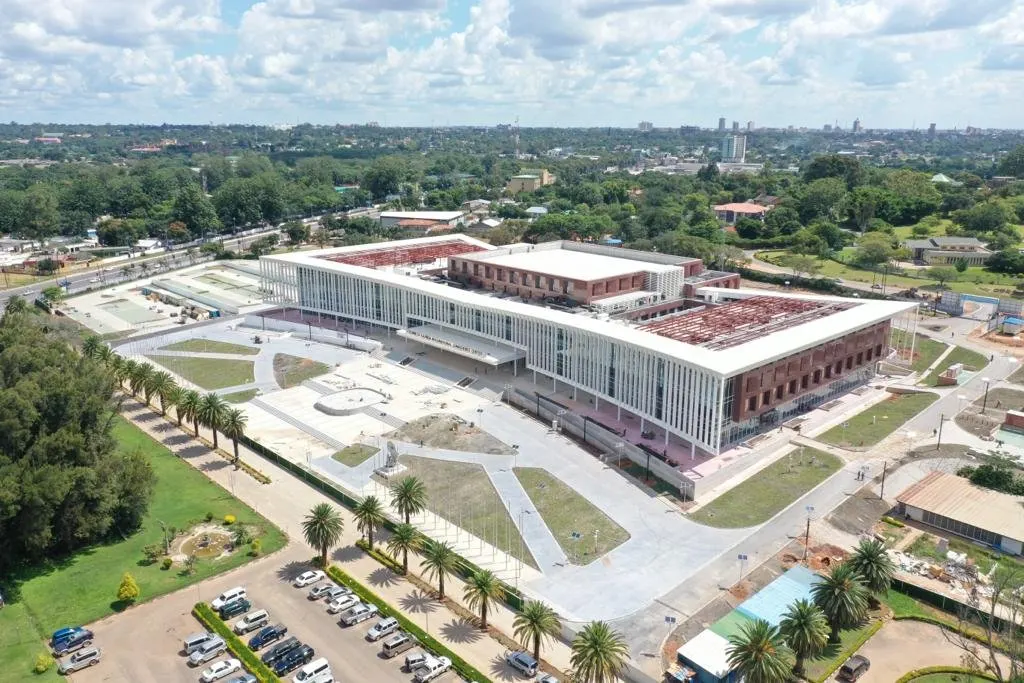
The venue of the conference is Mulungushi International Conference Centre, Great East Road, Lusaka, Zambia
- Visa Application
- Transportation
- Accommodation
- Currency & Payments
- Climate
Most international travelers require a visa to enter Zambia. Visit the Zambia Immigration Department website for detailed information.
Pro Tip: Apply for your visa at least 4 weeks before travel to avoid last-minute delays.
Airport Transfers: Lusaka’s Kenneth Kaunda International Airport (LUN) is the main entry point. Pre-arranged transport or reputable taxi services are recommended.
Local Transport: Reliable options include:
Registered taxis (always agree on the fare before starting the trip)
Ride-hailing apps like Ulendo (similar to Uber)
Conference shuttle services, if provided
Note: Avoid using unregistered taxis or public minibuses for safety reasons.
Consider staying in hotels near the Mulungushi International Conference Centre for convenience. Recommended hotels include:
ACCOMMODATION NAME | STAR RATING | DISTANCE |
Radisson Blu Hotel Lusaka | 4 Star | 700 m |
Protea Hotel Lusaka Tower | 3 Star | 1.1km |
Neelkanth Saravor Hotel | 5 Star | 1.8km |
Southern Sun | 4 Star | 4.3km |
Intercontinental Hotel | 5 Star | 2.2km |
Taj Pamodzi Hotel | 4 Star | 4.0km |
Cargo 88 Hotel | Ungraded | 1.7km |
Best Western Plus Hotel | 3 Star | 4.2km |
Stay Easy Hotel | 2 Star | 5.3km |
Asmara Hotel | Ungraded | 1.0km |
Golden Peacock | 4 Star | 2.8km |
Mika Hotel | Ungraded | 5.9km |
Latitude 15 Hotel | Ungraded | 9.7km |
Grand Palace Hotel | Ungraded | 1.3km |
Agora Apartments | Ungraded | 2.6km |
M’kango Golfview Hotel | 2 Star | 3.9km |
The Urban Hotel | 3 Star | 9.7km |
Ciela Resort & Spa | Ungraded | 26.8 km |
Fallsway suites | Ungraded | 4.9km |
Le Elementos | Ungraded | 2.6km |
The Quorum Hotel | Ungraded | 7.6km |
Book your accommodation early, as rooms may fill quickly around the conference dates.
Local Currency: Zambian Kwacha (ZMW). Click here to view the tentative exchange rates
ATMs & Banks: Widely available in Lusaka. Inform your bank of international travel to avoid card issues.
Credit Cards: Accepted in major hotels and restaurants. Carry some cash for smaller vendors.
Weather: Check the weather forecast here
What to Pack:
Light, breathable clothing for daytime
A light jacket or sweater for cooler evenings
Comfortable shoes for walking
Sunglasses, sunscreen,
FAQs
The conference will take place from 27 to 29 May at the Mulungushi International Conference Centre, Lusaka, Zambia.
PANAFCON-3 is open to government officials, policymakers, private sector leaders, and international organizations focused on water and sanitation solutions. It also welcomes researchers, civil society groups, media professionals, and innovators seeking to address water challenges in Africa. Entrepreneurs, startups, and the general public with an interest in sustainable water management can also attend to network and explore investment opportunities.
You can register online via the official conference website (details coming soon). Registration is free, however accreditation would be done for interested participants. Only accredited participants would be allowed to the conference venue. Early registration is encouraged to secure your spot.
Visa requirements vary by country. Please check with the Zambian embassy or consulate in your location. Some nationalities may be eligible for a visa on arrival or e-visa application.
Yes, virtual attendance options will be available for those unable to travel. Details on how to join online will be shared closer to the event.
There are several hotels near the conference venue. A list of recommended accommodations can be found here.
Proposals can be submitted through the registration portal whose link would be made available soon. Guidelines and deadlines for submission will be outlined in the call for papers.
Stay informed by subscribing to our newsletter, following our social media pages, and checking the official website for the latest updates.
Contact Information
For conference-related inquiries, email us: panafcon-3@amcow-online.org
We look forward to welcoming you to Lusaka for an enriching conference experience. Safe travels!