





Contacts

11 TY Danjuma Street, Abuja Nigeria

info@amcow-online.org
secretariat@amcow-online.org

+234 9096074166

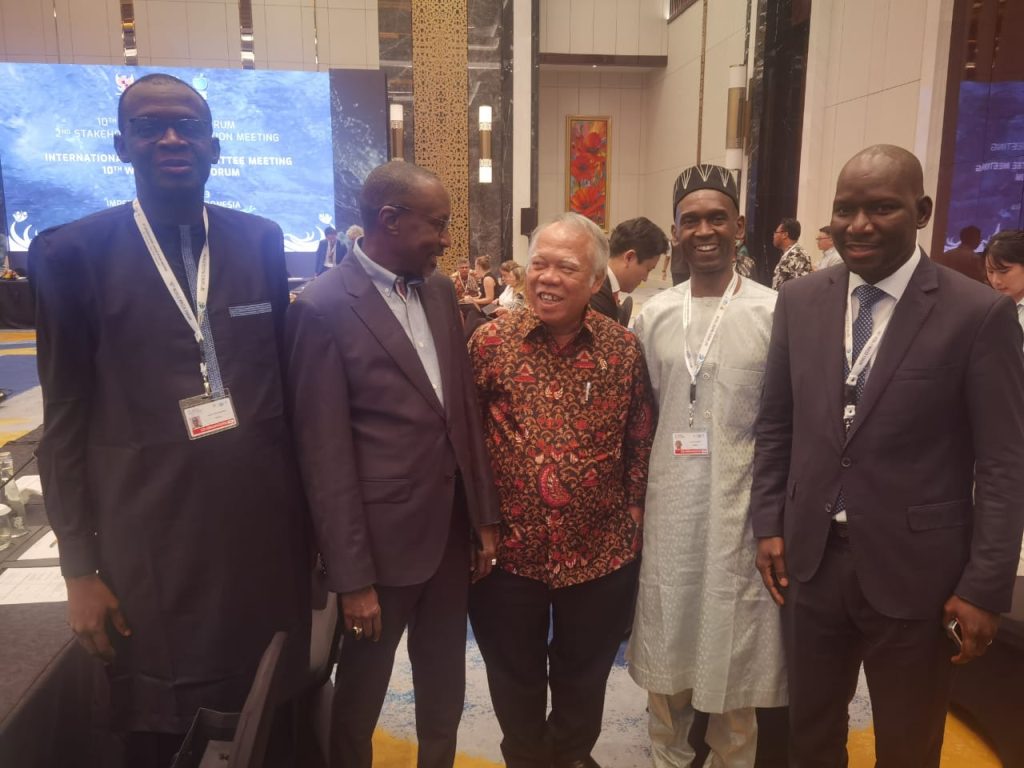
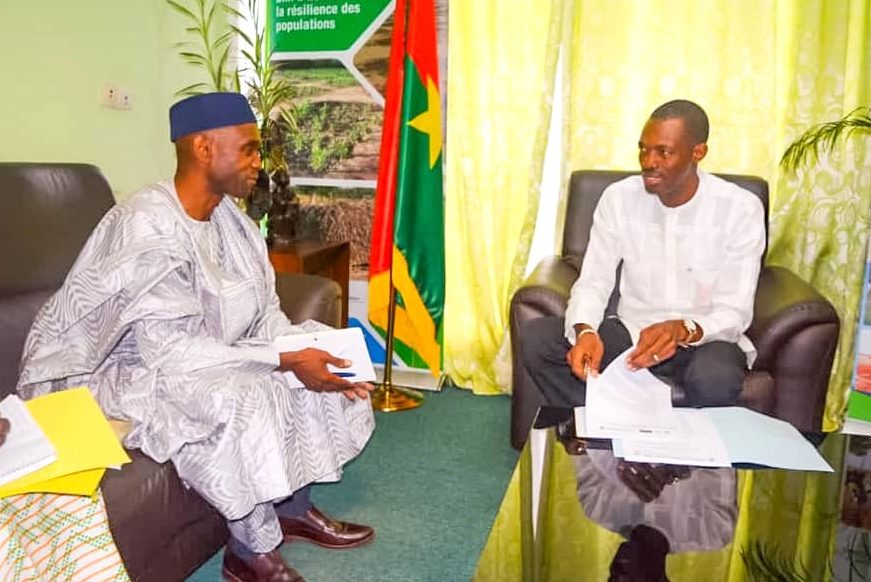
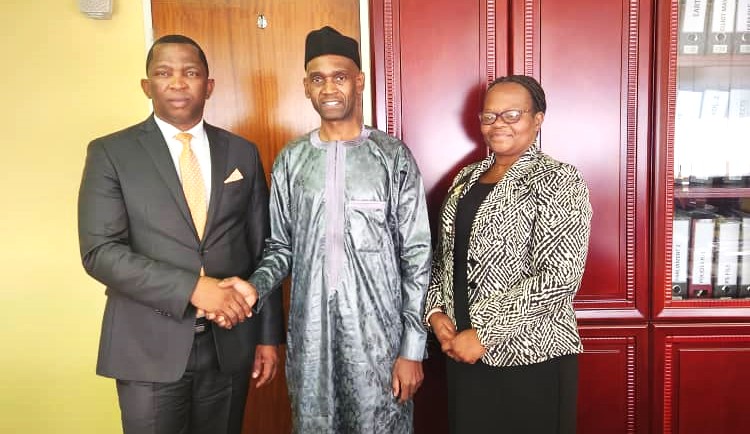
AMCOW ES with Senegal Minister
News

AMCOW President, Dr Cheikh Tidiane DIEYE, commits to work with Water Ministers on the Continent to drive Water and Sanitation Agenda

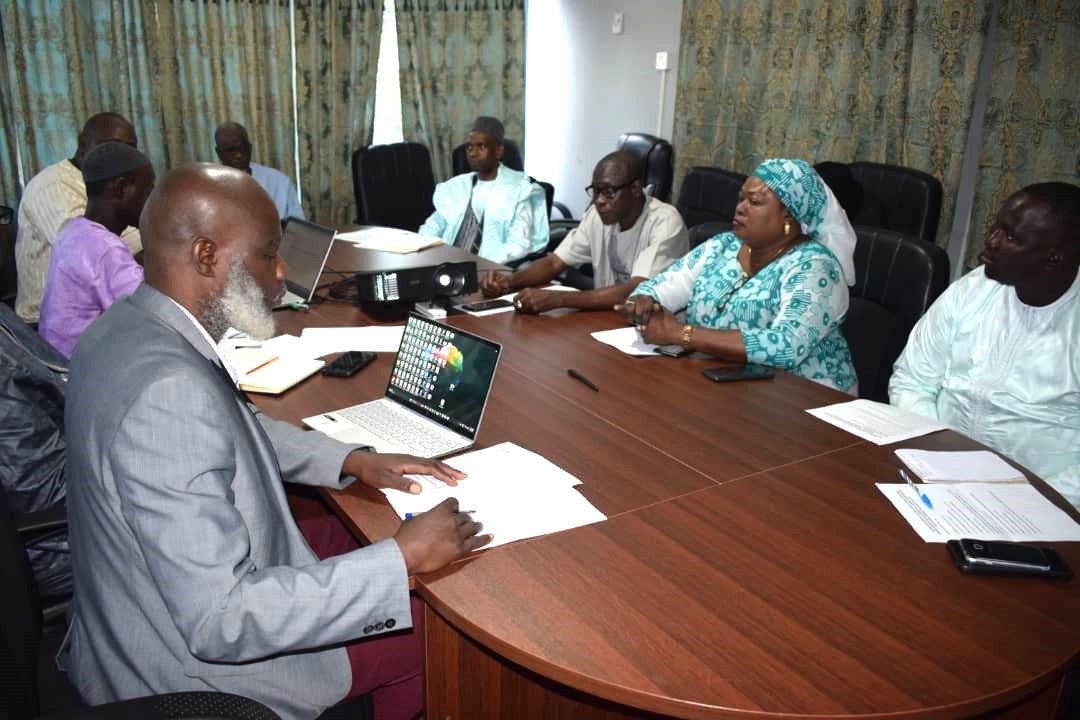
On Monday, April 28, the AMCOW President, Dr Cheikh Tidiane DIEYE reaffirmed Senegal’s commitment towards setting the water and sanitation agenda on the Continent. His Excellency Dr DIEYE, who is also Senegal’s Minister for Water and Sanitation said this during a working session with AMCOW Executive Secretary, Dr Rashid Mbaziira.

Dr Mbaziira used the occasion to thank AMCOW President and the Government of the Republic of Senegal for support and commitment towards the AMCOW work programme.

The Republic of Senegal, together with Member States and the African Union Commission, advocated for the adoption of water and sanitation as the African Union Theme for 2026. During the 38th Ordinary Session, the Assembly of the Heads of State and Government (HoSG) of the Union took a decision adopting “Assuring Sustainable Water Availability and Safe Sanitation Systems to Achieve the Goals of Agenda 2063” as the African Union Theme of the year 2026.

The business of the Union to commemorate the water and sanitation theme will be launched at the 39th Ordinary Session of the Assembly in February 2026. The Summit will set the stage for consideration and adoption of an Africa Water Vision and Policy. The goal is to strengthen water security towards attainment of Africa’s aspirations to expand economic opportunities; and curtail the factors underlying unemployment, migration, displacement and insecurity.

Regarding the formulation of the post-2025 Africa Water Vision and Policy, the AMCOW President, pledged to work with fellow Ministers to ensure consensus on priorities and common position. Dr DIEYE emphasised on the importance of strengthening cooperation and hydro-diplomacy within the context of existing challenges, including climate change.

He observed that the third African Implementation and Partnership Conference on water and sanitation (PANAFCON-3), hosted by the Republic of Zambia’s on 27 – 29 May 2025, provides an opportunity to build the consensus among political leaders.

Further, the AMCOW President also pledged to work with Member States to ensure vertical linkage and articulate Africa’s common position during the 2026 UN Water Conference. Senegal is Co-Chair with the United Arab Emirates of the 2026 UN Water Conference planned for December 2026 in Abhu Dhabi.

Dr DIEYE invited the Executive Secretary to work closely with the AMCOW Technical Advisory Committee (TAC) Chairperson, Dr Bakary FATY, to strengthen engagement with Member States and development partners. During the working session, the AMCOW President was joined by Dr Mohamed C DIATTA (Focal Person for 2026 UN Water Conference), Dr Amadou GUEYE (Deputy Focal Person for the 2026 UN Water Conference) and Omar SENE (Director of Sanitation).   

The Republic of Senegal assumed the presidency from the Arab Republic of Egypt on 3 March 2025, and will lead AMCOW for a two-year term until 2027.


Le Président de l'AMCOW, le Dr. Cheikh Tidiane DIEYE, s'engage à travailler avec les ministres de l'eau du continent pour faire avancer l'agenda de l'eau et de l'assainissement

Le Président de l’AMCOW, le Dr. Cheikh Tidiane DIEYE, s’engage à travailler avec les ministres de l’eau du continent pour faire avancer l’agenda de l’eau et de l’assainissement.

Le lundi 28 avril, le Président de l’AMCOW, Dr Cheikh Tidiane DIEYE, a réaffirmé l’engagement du Sénégal à définir l’agenda de l’eau et de l’assainissement sur le continent. Son Excellence le Dr DIEYE, qui est également ministre sénégalais de l’eau et de l’assainissement, a fait cette déclaration lors d’une séance de travail avec le Secrétaire exécutif de l’AMCOW, le Dr Rashid MBAZIIRA.

Le Dr MBAZIIRA a profité de l’occasion pour remercier le président de l’AMCOW et le gouvernement de la République du Sénégal pour leur soutien et leur engagement envers le programme de travail de l’AMCOW.

La République du Sénégal, de concert avec les États membres et la Commission de l’Union africaine, a plaidé pour l’adoption de l’eau et de l’assainissement comme thème de l’Union africaine pour l’année 2026. Lors de sa 38ème session ordinaire, la Conférence des Chefs d’Etat et de Gouvernement (HoSG) de l’Union a pris une décision adoptant « Assurer une disponibilité durable de l’eau et des systèmes d’assainissement sûrs pour atteindre les objectifs de l’Agenda 2063 » comme thème de l’Union africaine pour l’année 2026.

Les travaux de l’Union pour commémorer le thème de l’eau et de l’assainissement seront lancés lors de la 39ème session ordinaire de l’Assemblée en février 2026. Le sommet ouvrira la voie à l’examen et à l’adoption d’une Vision et d’une Politique africaines de l’eau. L’objectif est de renforcer la sécurité de l’eau en vue de réaliser les aspirations de l’Afrique à élargir les opportunités économiques et à atténuer les facteurs sous-jacents au chômage, à la migration, au déplacement et à l’insécurité.

En ce qui concerne la formulation de la Vision et de la Politique africaines de l’eau post-2025, le président de l’AMCOW s’est engagé à travailler avec ses homologues ministres pour garantir un consensus sur les priorités et une position commune. Dr. DIEYE a souligné l’importance de renforcer la coopération et l’hydro-diplomatie (la diplomatie liée à la gestion des ressources en eau) dans le contexte des défis actuels, y compris le changement climatique.

Il a observé que la Troisième Conférence panafricaine de mise en œuvre et de partenariat sur l’eau et l’assainissement (PANAFCON-3), accueillie par la République de Zambie du 27 au 29 mai 2025, offre l’occasion d’établir un consensus entre les dirigeants politiques.

En outre, le président de l’AMCOW s’est également engagé à travailler avec les États membres pour assurer la coordination entre les niveaux institutionnels et exprimer la position commune de l’Afrique lors de la Conférence de l’ONU sur l’eau de 2026. Le Sénégal copréside avec les Émirats arabes unis la Conférence des Nations unies sur l’eau de 2026, prévue en décembre 2026 à Abou Dhabi.

Le Dr DIEYE a invité le Secrétaire exécutif à travailler en étroite collaboration avec le Président du Comité consultatif technique (TAC) de l’AMCOW, le Dr Bakary FATY, afin de renforcer l’engagement avec les États membres et les partenaires de développement. Au cours de la session de travail, le Président de l’AMCOW a été rejoint par le Dr Mohamed C. DIATTA (Point focal pour la Conférence de l’ONU sur l’eau 2026), le Dr Amadou GUEYE (Adjointe au Point focal pour la Conférence de l’ONU sur l’eau) et Omar SENE (Directeur de l’Assainissement).

La République du Sénégal a succédé à la République arabe d’Égypte et assurera la présidence de l’AMCOW jusqu’en 2027, pour un mandat de deux ans

SAM NUJOMA4
Special Messages

AMCOW mourns the passing of His Excellency Dr Sam Nujoma, Father of the Nation and Founding President of the Republic Of Namibia

We convey the condolences of the African Ministers’ Council on Water (AMCOW) on the passing of the founding father of the Nation and president of the Republic of Namibia, His Excellency Dr Sam Shafiishuna Nujoma on 9 February 2025.

We join the people and the Government of the Republic of Namibia in mourning during this dark moment.

We will, forever, remember His Excellency’s dedication of his life to his people. He lived a remarkable life serving, from an early age, the people of the Republic of Namibia as a freedom fighter, revolutionary leader and the founding father of the Nation.

His extra-ordinary and exemplary leadership laid the foundations on which policies for sectors including water and sanitation were built and established for the benefit of the people of the Land of the Brave and beyond.  

His legacy will always remind us of what it really means to apply the philosophy of ubuntu.

Bala
News

AMCOW announces Acting Director of Corporate Services

The African Ministers’ Council on Water (AMCOW) announces the appointment of Mr Bala M Taham as acting Director of Corporate Services. The appointment takes immediate effect.

Mr Bala is a pioneer staff member of AMCOW. He brings to the role over two decades of experience and demonstrated success in financial management, administration, human resources management and procurement.

He holds a bachelor’s degree in accounting from Ahmadu Bello University (ABU Zaria). In addition, he is a certified member of the Chartered Institute of Cost and Management Accountants (CICMA), the Nigerian Institute of Management (NIM), and the Chartered Institute of Procurement and Supplies (CIPs).

Mr Bala has held several positions in the Corporate Services Department at AMCOW – including Project Accountant, Procurement Specialist, HR and Procurement Specialist, and currently, Government Liaison Officer. He will act as the Corporate Services Director pending the appointment of a substantive Director for the department.

Procurement

Second Call for Expression of Interest – AMCOW Secretariat Roster for Experts

The second round of submissions of submission of Expression of Interest is now open for the AMCOW Roster of Experts.

The AMCOW Roster of Experts (RoE) is a database of qualified service providers for delivering adhoc, short-term assistance to the Secretariat in the framework of its work programme.

The Roster applies for the purpose of contracting services such as consultancy, legal services and supply of goods, falling within the areas listed in the call for expressions of interest under the AMCOW budget.

Apply and share your expertise

Candidates are requested to submit their applications using the online form below. Before accessing the form, it is advisable to have the listed attachments ready for submission. 

Please, also consider: 

    • The attachments will contribute to the assessment and processing of your application. 
      • You can download Annexes I-III in word format below.
      • Upload files in pdf, jpeg, jpg, png, gif format only.  
      • The volume of your attachments should not exceed 15MB.
    • Mandatory fields are marked with an asterisk (*).
Submit your application within one session. You can not return to the form, nor save it.
 
Interested individuals or firms are invited to submit their expression of interest on or before 31 January 2025. Please note that those who already submitted their expression of interest on or before 20 January 2025 need not to re-submit. Kindly note that submissions will be reviewed on a rolling basis.
 

Natural Persons

REQUIRED ATTACHMENTS:

Legal Entities

REQUIRED ATTACHMENTS:

Dr Rashid delivers speech at PIDA
Special Messages

Speech Delivered by the AMCOW Executive Secretary, Dr Rashid Mbaziira, at the 8th Programme for Infrastrusture Development in Africa

Session title: Accelerating Preparation and Financing of Transboundary Water Projects: Bridging Capacity and Funding Gaps.
Keynote Address: Dr. Rashid Mbaziira, AMCOW Executive Secretary

Ladies and Gentlemen, the session title “Accelerating preparation and financing of transboundary water projects: Bridging capacity and funding gaps” could not be better fitting for where the water sector on the continent finds itself in this moment in time.
The demand for capacity development and improvements in financing transboundary water management is defined by the role water plays in Africa’s ambitions for economic growth and social transformation. These ambitions are espoused by the African Union Agenda 2063, a key priority area of which is assuring water security.
For this discussion, I use the 2013 UN Water definition of water security, which is developing the capacity “… to safeguard sustainable access to adequate quantities of acceptable quality water:

  • for sustaining livelihoods, human well-being, and socio-economic development,
  • for ensuring protection against water-borne pollution and water-related disasters, and
  • for preserving ecosystems in a climate of peace and political stability”.

In this context, our aspirations for growth and transformation are juxtaposed with the influence of water access and use on overall economic output. What emerges is that capacity and funding constraints in the water sector pose grave implications for the realisation of Africa’s development agenda. Challenges are invariably reported in:

  1. preparation of bankable projects at all levels,
  2. weak institutional capacities for project preparation,
  3. inadequate private sector investments in water; and
  4. the inadequacy of a compelling business case for investments in water that can catalyse sustained financing commensurate with Africa’s development ambitions.

The fundamentals of the required response can, therefore, be summarised into five key points as follows:

  1. Promoting a new narrative on water that recognises the full potential of water in the economy to further Africa’s future development needs. This narrative should foster an appreciation of the vitality of water in economic growth; job creation; and industrialisation.
  2. Strengthening the business case for water investments, as well as raising the profile of water in national and regional development planning in Africa. The economies of many countries in Africa are extremely vulnerable to climate variability and climate change as they are largely based on natural resources – water, land, energy, forests/ecosystems.
    Insufficiency of investments to enhance human and institutional capacities; build infrastructure; and improve information systems to support water management exacerbate the difficulties. To overcome these challenges – and achieve the SDGs – it is imperative for governments, societies and the private sector to fully embrace the concept of environmental security. A paradigm shift in the approach to developing, utilising and managing Africa’s water and related resources is urgently required.
  3. Water infrastructure development should be advocated for and promoted as a means to provide a service – which is water – to the economy in order to enable growth and development to happen. Water sector interventions, especially for such resource management functions as water storage and flood control, cannot therefore be designed and marketed from the perspective of ‘water sector development’. Rather, the approach to packaging them for investment should be centred on their eventual utility – from an economic perspective – in terms of providing water for food and energy production. This should be extended to the opportunities for employment and wealth creation: not to mention peace, social security, regional integration and political stability.
  4. Strategies to improve the investment outlook for water and related resources development will also benefit from the application of the principles for valuing water. The principles provide a guideline for determining the real value of proposed investments; the associated costs; and the benefits that can be expected. In essence, they serve the purpose of improving the appreciation of the economics of water in a country, river basin or region. The application of the principles of valuing water – together with targeted interventions to catalyse change – holds promise for delivering sustainable solutions for assuring water for energy, food and environmental security in Africa.
  5. There is an urgent need to apply integrated approaches – such as the Water-Energy-Food-and-Ecosystems nexus approach – to promote and facilitate investment led transboundary management and governance of water and environmental resources. The aim is to consolidate and capitalise on the achievements to-date of implementing the principles of Integrated Water Resources Management.
    This is the background to the current drive, under the leadership of the African Union Commission, AMCOW and AUDA-NEPAD to revitalise implementation of the following ongoing initiatives:
    i. establishing economic accounting for water as a discipline to, among others, improve the financing and investment outlook for water resources management in Africa;
    ii. improving national-level capacities, including the use of earth observation and remote sensing methods, for collecting complete and reliable hydro-meteorological and piezometrical data in all of Africa’s 64 shared river basins;
    iii. applying nexus perspective solutions to assure water, food and energy security in Africa;
    iv. improving agricultural water management;
    v. implementing the PIDA priority transboundary water and energy projects;
    vi. enhancing use of wastewater and sludge, as appropriate and acceptable, for nutrient recovery in agriculture and bio-gas energy production;
    vii. standardising regulatory frameworks for agricultural water management across Africa;
    viii. developing and adopting legal, policy and institutional frameworks for the collection and treatment of wastewater to a minimum water quality standard before return to the environment; and,
    ix. supporting Member States, R/LBOs and RECs to conduct water resources assessments as well as supporting them to monitor and manage groundwater use.
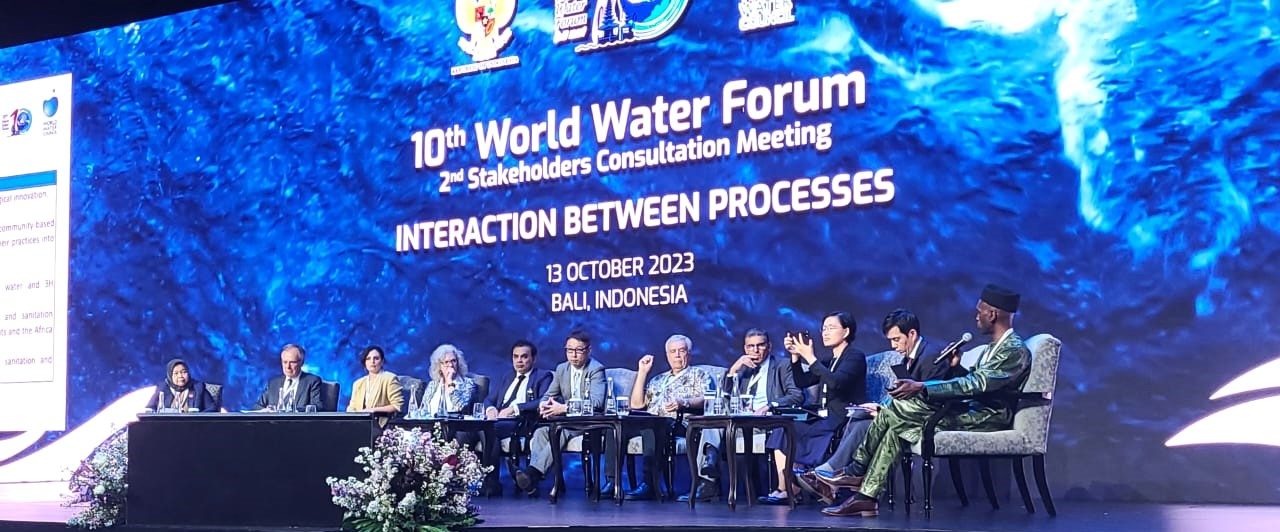
    As an outcome from the 10th World Water Forum in May 2024 in Bali, Indonesia, Africa’s Common Position and Key Messages committed:
    i. to align the post-2025 Africa Water Vision and Policy to the African Union Agenda 2063 and make the principles of valuing water the backbone of the action framework for financing its actualisation; and,
    ii. to invest in institutional and human capacity development focusing on integrated information systems to support science-based decision making for climate resilience in the water and sanitation sector.
    At the 9th Africa Water Week in October 2024, in Cairo, Egypt, the water community agreed on the baseline for formulating the post-2025 Africa water vision and policy. This is contained in the 9th Africa Water Week Communique on “Placing Water and Sanitation at the Heart of Achieving Agenda 2063: The Africa We Want.
    Going forward, a key milestone of the dialogue process to formulate the vision and policy will be to convene the third African Implementation and Partnership Conference (PANAFCON-3) scheduled for 27-29 May 2025 in Lusaka, Zambia. The conference will pave way for Member States and partners to review the initial draft of the vision and policy framework for assuring inclusive and climate resilient water security on the continent.
    Let us all actively engage to ensure that that post-2025 Africa water vision and policy framework motivates action on bridging capacity and funding gaps in the water sector in Africa.

I wish you a productive discussion and thank you!

Lorem ipsum dolor sit amet, consectetur adipiscing elit. Ut elit tellus, luctus nec ullamcorper mattis, pulvinar dapibus leo.

image-removebg-preview (22)
News

AMCOW Releases Midterm Evaluation Results for Strategic Operational Plan 2020-2024

The African Ministers’ Council on Water (AMCOW) has unveiled the highly anticipated midterm evaluation results for its Strategic Operational Plan (SOP) 2020-2024. This plan, which serves as the backbone of AMCOW’s efforts to drive the sustainable development of Africa’s water resources, is designed to align with the continent’s broader goals under the Africa Water Vision 2025 and the global Sustainable Development Goals (SDGs).

The midterm review offers a comprehensive assessment of the progress made in the first half of the implementation period. Key achievements include strengthening water governance frameworks across several member states, enhanced partnerships with regional and international organisations, and strides in the knowledge management landscape by launching the AMCOW Knowledge Hub.

Regarding water and sanitation service delivery, the report highlights the significant progress made in improving access to clean water for both rural and urban populations. Several countries have also successfully developed more robust monitoring systems for water quality, which are crucial for safeguarding public health and ensuring sustainable water use.

However, the evaluation also underscores critical challenges. Some of these include gaps in funding and capacity that are slowing progress and the increasing impact of climate change on water resources. The growing need for adaptive measures to ensure the resilience of water systems has been a key takeaway from the report.

Moving forward, AMCOW will focus on accelerating the pace of the plan’s implementation, bolstering its efforts to enhance cross-sector collaboration, mobilise resources, and scale up innovative solutions for integrated water resource management. As AMCOW enters the second half of its Strategic Operational Plan, it remains committed to strengthening Africa’s water security and fostering inclusive development. The midterm evaluation provides valuable insights to inform ongoing efforts to achieve lasting results by 2024, ensuring that the continent remains on track to meet its water and sanitation goals.

Profit rounded lines icon
Uncategorized

AMCOW Pens Funding Agreements worth US $3.87 million

In this quarter, engagements with existing and new funding partners culminated in agreements being reached for the equivalent of US $3.87 million in grants to implement the AMCOW work programme. Specifically:

  • A €2.6million funding agreement with the European Commission through the Deutsche Gesellschaft für Internationale Zusammenarbeit (GIZ) GmbH for the continental window – the Blue Africa Action – of the Team Europe Initiative on Transboundary Water Management (TEI-TWM).
  • A grant agreement of US $ 1 million with the Global Environment Facility (GEF) through the International Water Management Institute (IWMI) and the Food and Agriculture Organisation (FAO). 

AMCOW’s financial stability is thus secured in the short term. Member States’ commitment to AMCOW’s long-term financial sustainability is demonstrated by their renewed commitment to clear arrears in annual contributions.

AMCOW remains grateful to its existing and new funding partners, including the Bill and Belinda Gates Foundation (BMGF), the United States Agency for International Development (USAID), the European Union through GIZ under the TEI-TWM, the Global Environment Facility (GEF) through the International Water Management Institute (IWMI) and the Food and Agriculture Organisation (FAO). AMCOW also appreciates the support from the African Development Bank (AfDB) through the Africa Water Facility (AWF) towards its work programme and global agenda-setting events, including the 9th Africa Water Week.

AWW announcement
Uncategorized

Progress Update on the 9th Africa Water Week in Cairo, Egypt

Preparations towards the 9th Africa Water Week, scheduled in Cairo, Egypt, from 13 – 18 October, are progressing rapidly. Participants from Africa and worldwide are excited to join over 1500 people in Cairo for this critical event. This presents a special moment to take stock of progress made in our quest to achieve the Africa Water Vision, analyse the status quo and initiate processes for formulating the post-2025 Africa Water Vision and policy with an actionable implementation plan.

The AWW9 will be held at the Triumph Luxury Hotel, Cairo, Egypt, which was strategically selected to foster networking engagements across all participants’ spectrums. Recommended hotels nearer to the conference venue are accessible here:

Over 40 technical sessions will be convened across the five days. Sessions revolve around financing, water and sanitation, water resources management, water infrastructure, knowledge management and youth involvement. Sessions are carefully evaluated to demonstrate practical lessons from the African government, United Nations agencies, the private sector, civil societies and nongovernmental organisations. Thematic plenary sessions will spotlight transboundary water management and the role of parliamentarians in unlocking financial resources for the water and sanitation sector. Interestingly, technical sessions will culminate into synthesis sessions, where outcomes from each session will be juxtaposed with reported progress on the Water Sector and Sanitation Monitoring and Reporting system. A critical analysis of progress will be made to establish convergence on essential elements and aspects to feature in the post-2025 Africa Water Vision and policy.

Networking opportunities exist during the AWW9 to connect participants with partners of interest. The industry has over 30 experts and companies showcasing their brands and products, so it provides an apt atmosphere to engage and initiate long-lasting relationships for collaboration and business opportunities.

The opening and closing ceremonies are equipped with influential sector leaders and government officials to provide direction for the conference, including the AMCOW President, Hon Hani Sewilam, Minister of Water Resources and Irrigation, and representation of the African Union Commission and African Development Bank. The 14th Executive Committee meeting of the AMCOW executive council will be convened on 16th October to deliberate on the conference outcomes and pronounce blessings for successful implementation. 

Essential links to support your participation towards the conference are presented here:

For more information, email the 9th Africa Water Week Team at 9aww@amcow-online.org

Coca-Cola Africa
Uncategorized

AMCOW Congratulates Coca-Cola For Launching the Water Stewardship Initiative in Africa

On 27 August 2024, the Coca-Cola System in Africa launched its Water Stewardship Initiative to address water-related challenges in hotspot basins and communities across 18 African Union Member States. The initiative is part of Coca-Cola’s goal to support and advance the United Nations’ Sustainable Development Goal 6, focusing on water and sanitation.

AMCOW congratulated the Coca-Cola System in Africa and its partners for launching this New Water Stewardship initiative. Speaking during the launch through a video message, the AMCOW Executive Secretary, Dr Rashid Mbaziira, lauded Coca-Cola for recognising the need to protect and enhance the health of watersheds and facilitate access to water and sanitation services for vulnerable communities.

In his address, Dr Mbaziira reminded Coca-Cola and partners that Africa’s population will reach 1.6 billion by 2030. While this is a potential business market, the implication is that, at the very minimum, food production must increase by 50% to feed that growing population. “Juxtaposed with aspirations for modern economies and social progress, we are looking at a requirement of a tenfold increase in water just for energy production”, added Dr Mbaziira.

The private sector is all too aware of the business risk that water insecurity presents, noted Dr Mbaziira. So, too, is its yet-to-be-fully-tapped potential for collective action to guarantee business continuity and ensure shared prosperity. Dr Mbaziira expressed optimism about the new water stewardship initiative by the Coca-Cola Africa System, and partners responded to that reality.

AMCOW stated that lasting solutions to deliver transformative change, eradicate poverty and eliminate hunger must tackle the governance and institutional capacity constraints underlying water insecurity. The need to attract investments to the water sector that match Africa’s development ambitions is significant.

During the launch, Coca-Cola Systems and partners were informed that efforts are underway to formulate an Africa Water Vision and Policy that responds to these challenges and provides a strategic framework towards inclusive and climate-resilient water security on the continent. Ultimately, the vision and policy must motivate action to achieve the African Union Agenda 2063 goal of environmentally sustainable and climate resilient economies and communities through assuring water security, among others. Concluding his address, Dr Mbaziira invited the private sector and the partners to actively engage and contribute to formulating the post-2025 Vision and Policy. He used the opportunity to call on the Coca-Cola System in Africa to champion private sector engagement in this process, which will start at the upcoming 9th Africa Water Week.

Uncategorized

Recruitment of Consultant/s for Development of AMCOW Strategic Operational Plan (SOP) 2025-2030

Background

The African Ministers’ Council on Water (AMCOW) is an autonomous African intergovernmental body formed in 2002 to provide a coordinating platform for water policy dialogue on the African continent and promote sustainable management and development of the continent’s water resources with a focus on expanding access to water supply and sanitation services in Africa. AMCOW serves as a delivery mechanism on water and sanitation to the Specialized Technical Committee (STC) on Agriculture, Rural Development, Water and Environment (ARDWE) of the African Union Commission.

To achieve its mission, AMCOW developed a twelve-year year  Strategic Plan (SP) 2018-2030 to guide its activities and initiatives. In line with this overarching strategy, AMCOW has been operating under its current Strategic Operational Plan (SOP) 2020-2024.

The SOP 2020-2024 was designed to operationalize the AMCOW Strategy 2018-2030, focusing on key priority areas including:

Strategic Priorities:

    1. Ensure Water Security

    1. Ensure Safely Managed Sanitation and Hygiene

    1. Promote Good Water Governance and Transboundary Water Cooperation

    1. Strengthen AMCOW’s Governance and Operational Effectiveness

Cross-cutting Priorities:

    1. Enhance Water and Sanitation Resilience to Climate Change

    1. Contribute to Adequate and Sustainable Financing of Water and Sanitation Agendas

    1. Improve Monitoring, Evaluation and Knowledge Management Systems

    1. Strengthen Gender Equality and Youth Empowerment in Water and Sanitation

The SOP 2020-2024 also outlined specific objectives, activities, and key performance indicators for each priority area, providing a roadmap for AMCOW’s operations and initiatives over the last five-year period.

Objective

The objective of the task is to develop AMCOW (2025-2030) Strategic Operational Plan (SOP) which is   aligned to the AMCOW strategy covering the period from 2018 to 2030. Currently, as we approach the end of 2024, the SOP is set to conclude, necessitating the development of a subsequent strategy. The development of the new SOP comes at a critical juncture.The existing Africa Water Vision expires in 2025 and the formulation of the post-2025 Africa Water Vision, and an accompanying Continental Policy, is underway to provide a continental implementation framework for Agenda 2063.

A mid-term evaluation of the SOP 2020-2024 has been conducted, providing valuable insights and lessons learned for the development of the new SOP. This evaluation will serve as a crucial input in ensuring that the new SOP builds upon successes, addresses challenges, and aligns with evolving needs and priorities in the water and sanitation sector. Thus, given the importance of this document in guiding AMCOW’s activities and initiatives during this pivotal period, AMCOW is seeking to engage the services of an experienced and professional independent consultant or team to develop the SOP 2025-2030.

Scope of Work

The new SOP 2025-2030 will play a crucial role in this transition period. Thus, it will not only translate AMCOW’s overarching strategy into specific actions but also bridge the current strategic framework with the emerging post-2025 Africa Water Vision and Africa Water initiatives and policy. The SOP is expected to define outputs to be delivered, annual milestones to be achieved, planned activities, available resources, and performance indicators to measure progress in achieving the strategic objectives over the next five (5) years, all while aligning with the existing and new continental vision/ policies and global strategies for water resource management.

Deliverables

The development of the SOP 2025-2030 is key for translating AMCOW’s long-term strategy into actionable plans and for aligning AMCOW’s activities with emerging water and sanitation sector needs at the Member States’ level.

Hence, the consultant (s) is expected to undertake the following tasks:


Phase 1: Inception and Review

  1. Conduct a comprehensive review of relevant documents, including:
  • AMCOW Strategy 2018-2030
  • Agenda 2063 and related implementation reports.
  • Current SOP 2020-2024
  • Mid-term evaluation of the SOP 2020-2024
  • Africa Position Paper prepared for the 10th World Water Forum
  • Partners’ strategies, especially the African Development Bank (AfDB), the African Union Commission (AUC), Africa Water Facility (AWF), Regional Economic Communities (RECs), River, Lake Basin organisations (RLBOs)
  • Conduct preliminary interviews
  • WASSMO Reports
    • Relevant regional and global water and sanitation policies and strategies
    1. Conduct situational analysis of the current water and sanitation sector needs in Africa, identifying key challenges and opportunities.
    2. Identify key stakeholders for interviews
    3. Develop and present an inception report outlining the detailed methodology and work plan, and for developing the SOP 2025-2030.

    Key Deliverables:

    • Inception report including literature review findings, methodology, and detailed work plan
    • Presentation of inception report to AMCOW Secretariat
    • Phase 2: Stakeholder Engagement and Draft Development

      1. Engage with the AUC and AMCOW-Secretariat teams to understand the roadmap and priorities building on the Africa Regional Position paper for the post-2025 Africa Water Vison and Policy.
      2. Conduct interviews with identified key stakeholders
      3. Develop a draft SOP 2025-2030 that aligns with the AMCOW Strategy 2018-2030 and addresses emerging water and sanitation sector needs in Africa, including:
        • Specific, measurable, achievable, relevant, and time-bound (SMART) objectives
        • Expected outcomes and outputs
        • Key performance indicators
        • Implementation strategies and timelines
        • Resource requirements and potential funding sources
      4. Design a monitoring and evaluation framework for the SOP 2025-2030, including tools for tracking progress and assessing impact.
      5. Propose strategies to enhance AMCOW’s operational effectiveness and resource mobilization capabilities within the context of the new SOP.

       Key Deliverables:

      • First draft of SOP 2025-2030
      • Draft monitoring and evaluation framework
      • Strategy document for enhancing AMCOW’s operational effectiveness and resource mobilization

      Phase 3: Consultation and Refinement


      1. Facilitate an internal consultative workshop to review the draft SOP with AMCOW Secretariat and incorporate feedback.
      2. Support consultations with Member States during statutory sub-regional meetings to gather feedback on the draft SOP.
      3. Synthesize and incorporate inputs received from Member States and partners during consultation and validation processes.
      4. Develop a final draft SOP 2025-2030

      Key Deliverables:

      • Revised draft of SOP 2025-2030 incorporating stakeholder feedback

      Phase 4: Finalization and Presentation

      1. Finalize the SOP 2025-2030, ensuring it addresses all key priorities and stakeholder feedback.
      2. Develop a detailed implementation roadmap for the SOP 2025-2030, including timelines, responsibilities, and resource allocation.
      3. Prepare and deliver a presentation of the final SOP 2025-2030 to AMCOW leadership.
      4. Provide any additional support or clarification required during the approval process of the SOP.

      Key Deliverables:

      • Final comprehensive SOP 2025-2030 document
      • Detailed implementation roadmap
      • Conduct presentation to AMCOW leadership

      Final report summarizing the entire process and recommendations for successful implementation.

    • The consultancy is expected to be completed over a period of 8 months. The consultant will provide the following deliverables, which are linked to payment milestones:


      No

      Consultant Deliverables/Outputs

      Payment Milestones (%)

      Timelines

      1

      Inception Report

      Detailed work plan including timeline, methodology, and initial findings from document review and situational analysis


      Format: Word document and PowerPoint presentation

      25%

      Mid November 2024

      2

      Consultation and Workshop Reports

      Summary of feedback from internal workshop and sub-regional consultations, including recommendations for SOP revisions


      40%


      November 2024 – April 2025

      3

      Draft SOP 2025-2030

      First complete draft of the SOP, including SMART objectives, outcomes, outputs, indicators, implementation strategies, and resource requirements

      4

      Final SOP 2025-2030 Package

      a.     Final SOP 2025-2030 document

      b.     Detailed implementation roadmap

      c.     Monitoring and evaluation framework

      d.     PowerPoint presentation for AMCOW leadership

      e.     Final consultancy report summarizing the entire process and providing recommendations for successful implementation


      Format: Word documents, Excel spreadsheets (for M&E framework and implementation roadmap), and PowerPoint presentation

      35%

      May to June 2025


      All deliverables should be submitted in English, in electronic format.

      Note: All payments are subject to the satisfactory completion and approval of the respective deliverables by the AMCOW Secretariat.

    • The consultant or team is expected to have the following minimum qualifications and experience:

      §  Demonstrated experience in undertaking similar assignments within Intergovernmental mandated institutions such as the AU, Regional Economic Commissions, River and Lake Basin Organisations and the UN and the Not-for-Profit Organisations such as NGOs and Civil Societies within the last 15 years.

      §  At least an advanced degree in water resources management, development studies, strategic planning, or related fields. In case of team of consultants, the team leader should meet the qualification requirement, and the CVs of team members should be submitted.

      §  Demonstrated knowledge of, the African water sector, and the institutional landscape in Africa.

      §  Strong analytical, writing, and communication skills.

      §  Excellent coordination skills and experience in conducting stakeholder consultations.


      §  Fluency in English is required; knowledge of French, Portuguese or Arabic is an advantage.

Lorem ipsum dolor sit amet, consectetur adipiscing elit. Ut elit tellus, luctus nec ullamcorper mattis, pulvinar dapibus leo.