
NewsPress Release
Africa Reaffirms Commitment to Safe and Climate-Resilient Sanitation for All
The African Ministers’ Council on Water (AMCOW) joins the global community in commemorating the World Toilet Day 2025, under the theme “We’ll Always Need the Toilet.” The World Toilet Day (WTD) as an official United Nations international observance day on 19 November aims to inspire action to tackle the global sanitation crisis.
This year’s theme emphasises that toilets are not optional; they remain indispensable to human health, dignity, environmental protection, and gender equality, and inclusive development – no matter how rapidly societies evolve.
Across Africa, progress in sanitation access is not sufficient. Only 45% of the population has basic sanitation and hygiene services. The rate of growth in sanitation services provision is outstripped by rapid population growth and urbanisation, and made worse by the impacts of climate change. The majority, nearly 780 million, still lack basic sanitation services, including 208 million who still practice open defecation. Furthermore, nearly 840 people are without basic hygiene services. This situation poses significant threats to public health, ecosystem integrity, economic productivity, and social inclusion on the continent.
The impacts of climate change compound the challenge. Flooding, drought, rising temperatures, rising sea levels, water scarcity, and ageing sanitation infrastructure continue to disrupt services across Africa. Poorly managed sanitation systems contribute to harmful greenhouse gas emissions — amplifying climate risks and making water supplies more unpredictable.
For Africa, the World Toilet Day 2025 is being commemorated in the final milestone year of the Africa Water Vision 2025. In 2000, we envisioned an Africa where there is equitable and sustainable utilisation of our water resources for socio-economic development, poverty alleviation, regional cooperation and the environment by 2025. What we have learnt from efforts to actualise this vision is the urgent need to inject new approaches into strategies to attract commensurate financial resources to the sector.
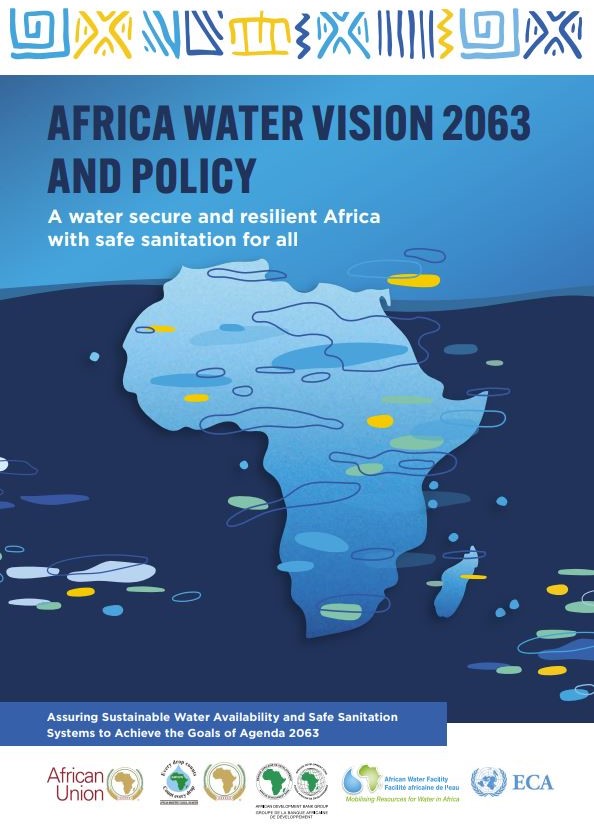
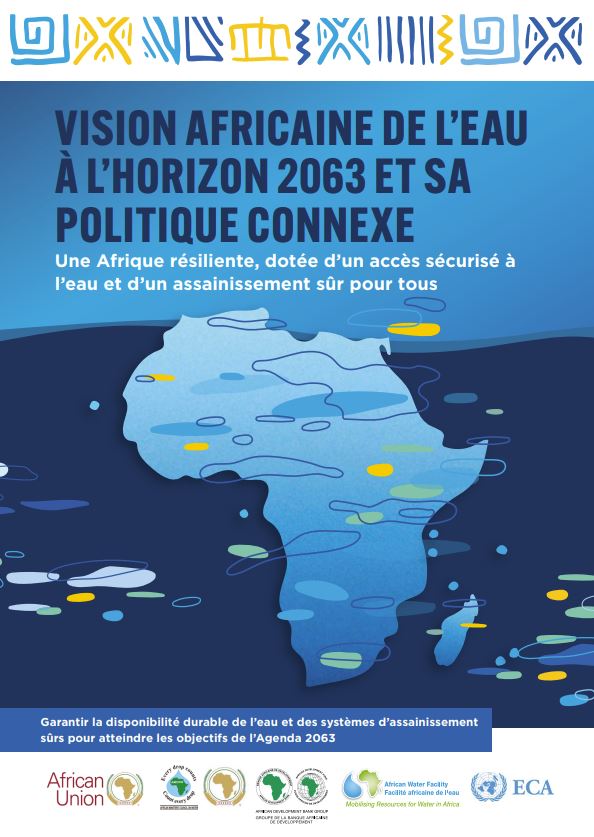
It is against this background that this year, the 14th Ordinary Session of the Governing Council of AMCOW, on 29 September, adopted the Africa Water Vision 2063 and Policy (AWVP63). There is consensus on the vision of “a secure and resilient water Africa with safe sanitation for all” as being bold and aspirational. In addition, it raises the profile of the principles of valuing water; digital intelligence; the circular sanitation economy; and the Blue Economy.
The new Africa Water Vision and Policy aim to: (i) Align with Agenda 2063 aspirations for a prosperous and climate-resilient Africa; (ii) Address challenges such as climate change, urbanization, pollution, and water scarcity; and (iii) Mobilise political leadership, financial resources, and stakeholder engagement to transform water and sanitation systems into engines of resilience and prosperity.
This Vision and Policy – of a water secure and resilient Africa with safe sanitation for all – is not merely aspirational. It is a blueprint for action within the context of assuring water security in pursuit of the goals of Agenda 2063. By prioritising universal access to safe water, sanitation and hygiene services; climate resilient resource management; and transboundary cooperation, we fortify the foundation for the Africa we want: prosperous, integrated, and peaceful.
Africa’s environmental and natural resources – and particularly freshwater resources – are faced with severe degradation. This stems primarily from sanitation and hygiene failures, especially inadequate services provision and unsafe practices; raw sewerage discharge; disposal of solid waste into rivers and storm drainage systems; leachate from refuse dumps; and mining and industrial effluent pollution.
The new Africa Water Vision and Policy aim to drive a sanitation economy revolution. This calls for shift from waste disposal to resource recovery and unlocking the circular sanitation economy through innovation and regulation. Action to release the full potential of the sanitation economy to benefit business and society in Africa requires a new narrative that transforms sanitation from a cost centre. Sanitation systems must evolve beyond waste disposal to resource recovery hubs. Policy should incentivise and regulate the safe recovery of value from organic waste and wastewater. This points towards the need for policies that provide inclusive, sustainable and resilient systems for safely managed sanitation and hygiene services delivery.
For the new Africa Water Vision and Policy, the next major event is the 39th Ordinary Session of the Assembly of the Heads of State and Government of the African Union in February 2026. It is where the continent will seek the Assembly to endorse the AWVP63 as (i) a continental implementation framework for Agenda 2063, and (ii) Africa’s Common Position and input to the UN 2026 Water Conference to accelerate the implementation of SDG 6.
Furthermore, the 38th Ordinary Session of the Assembly adopted “Assuring Sustainable Water Availability and Safe Sanitation Systems to Achieve the Goals of Agenda 2063” as the Africa Union theme for 2026. This presents an unprecedented opportunity to mobilise political leadership, strengthen partnerships, and accelerate investment across the sector.
About AMCOW
The African Ministers’ Council on Water (AMCOW) provides political leadership, policy direction, advocacy and strategic coordination for water and sanitation in Africa. The organs and structures of AMCOW serve as the Sectoral Committee on Water and Sanitation of the Specialised Technical Committee (STC) on Agriculture, Rural Development, Blue Economy, Water and Environment (STC on ARBWE) of the Africa Union.
For further information:
Email: info@amcow-online.org
Website: www.amcow-online.org