
News
KIGALI, RWANDA — 17 AUGUST 2026
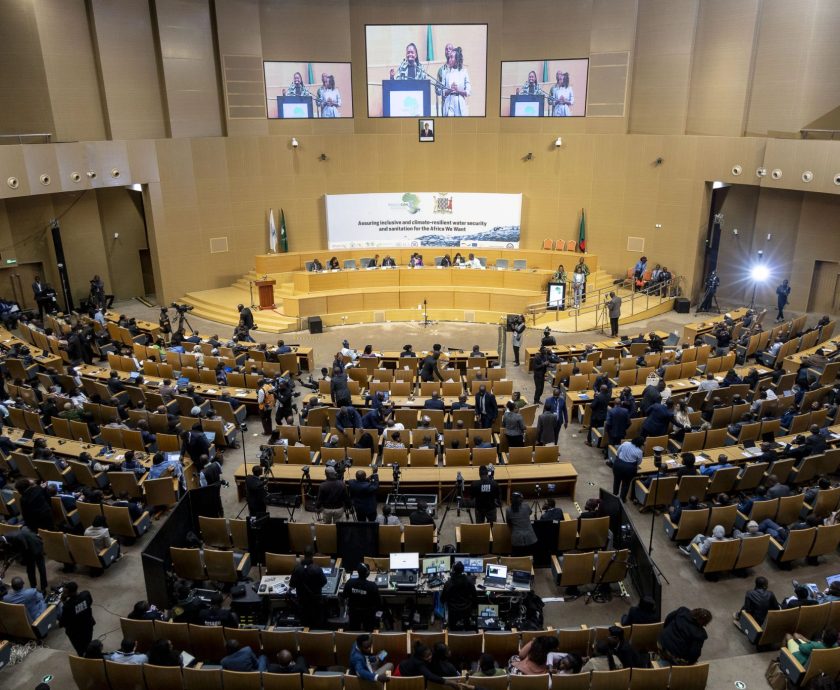
Water and Sanitation agenda took the centre stage in Kigali, capital city of Rwanda on Monday 17th August, 2026 with the formal opening of the Africa Water and Sanitation Systems Leadership Symposium 2026.
The high-level event brings together political leaders, ministers, regulators, utilities, development finance institutions, practitioners, innovators and development partners from across Africa and beyond.
The five-day symposium, taking place from 17 to 21 August 2026 at the Kigali Convention Centre, is convened by the African Ministers’ Council on Water (AMCOW), the African Union and the Government of Rwanda, with RIVA facilitating the gathering. It comes at a defining moment for Africa’s water and sanitation sector, with the continent seeking to translate high-level political commitments into functioning systems capable of delivering reliable, safe, inclusive and sustainable services.
The symposium is also taking place against the backdrop of the African Union’s designation of 2026 as the Year of Water, under the theme: “Assuring Sustainable Water Availability and Safe Sanitation Systems to Achieve the Goals of Agenda 2063.”
The continental focus has elevated water and sanitation from a sectoral concern to a strategic development priority, recognising its direct links to economic growth, public health, food security, energy, climate resilience and human development.
POLITICAL LEADERSHIP
The opening of the symposium brought high-level political leadership and actors to the centre of Africa’s water and sanitation conversation.
Rwanda’s Prime Minister, alongside the African Union Commissioner for Agriculture, Rural Development, Blue Economy and Sustainable Environment and the President of AMCOW, joined sector leaders and partners for the opening, signifying the important consideration for the continent’s water and sanitation agenda.
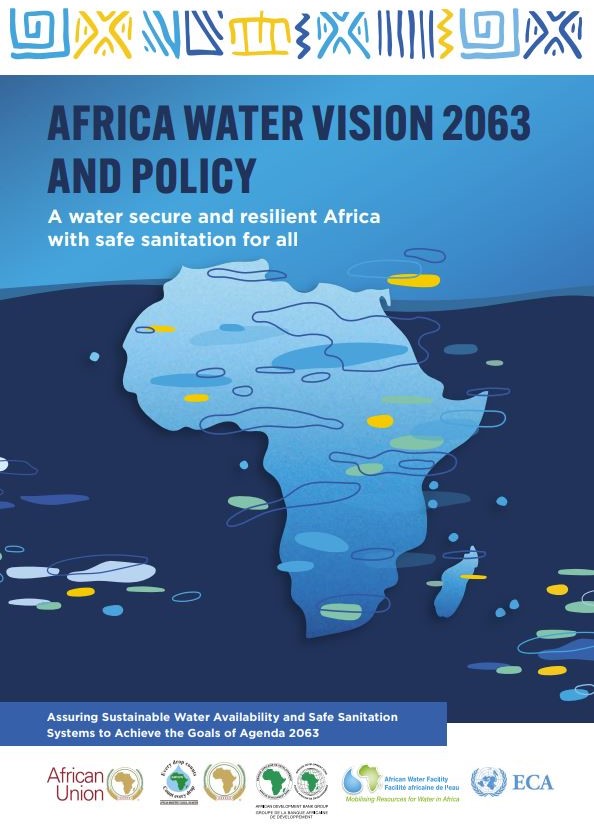
For the African Ministers’ Council on Water (AMCOW), the high-level participation is significant, given that the continent has already articulated a long-term ambition through the Africa Water Vision 2063 and Policy. The immediate challenge is implementation: ensuring that national and regional institutions have the capacity, finances, regulatory frameworks, data and accountability mechanisms required to turn commitments into results.
RWANDA’S MESSAGE: BUILD SYSTEMS, NOT JUST INFRASTRUCTURE
Host country, Rwanda placed the need for long-term systems thinking at the heart of the opening. The country’s Infrastructure Minister, Damien Murwanashyaka, underscored the distinction between constructing sustainable infrastructure and systems that can optimize services.
“Our challenge is not simply building more infrastructure; we must build reliable, safe, resilient, sustainable water and sanitation systems that can serve our growing population and economies over a long term,” Murwanashyaka said. This aptly captures one of the central focuses of the symposium, highlighting the fact that the Africa’s water and sanitation challenge cannot be addressed through infrastructure projects alone.
Pipelines, treatment facilities, toilets, water networks and other infrastructure must be supported by institutions capable of operating and maintaining them, financing systems capable of sustaining them, regulators capable of enforcing standards and professionals capable of delivering quality services. The challenge is therefore unmistakably systemic.
COMMITMENTS TO IMPLEMENTATION
Across the continent of Africa, governments have adopted ambitious water and sanitation policies and made commitments under the agenda 2063 and the Sustainable Development Goals. However, implementation had remained uneven.
The Kigali symposium provides a platform for countries to examine what is preventing commitments from becoming sustainable services and to identify practical reforms that can accelerate delivery.
Discussions have thus focused on political leadership, strategic public finance, regulation and accountability, professionalism, youth innovation and investment readiness.
The objective is to move beyond diagnosis towards country-led reforms and practical solutions.
BUILDING INVESTORS’ CONFIDENCE
As investment cannot be sustained where institutions are weak, regulatory frameworks are unpredictable or accountability systems are ineffective, a key conversation at the symposium is the role of regulation and accountability in making the water and sanitation sector investment-ready.
The symposium is also examining how legislative actors, civil society and cross-sectoral institutions can support regulatory reforms and strengthen accountability.
The underlying message is clear: Good regulation is not an obstacle to investment. It is one of the foundations of investor confidence.
FINANCING THE WATER AND SANITATION TRANSFORMATION
Financing remains one of the most critical questions facing Africa’s water and sanitation sector. But the Kigali discussions are also emphasising that investment readiness is more than money.
Governments must expand access while also maintaining existing infrastructure, adapting systems to climate pressures and responding to rapidly growing urban populations.
This requires stronger domestic resource mobilisation, more effective public expenditure and better alignment between public and private financing.
Investors need credible institutions, reliable data, transparent governance, predictable regulation and evidence that proposed investments can generate sustainable results.
The symposium therefore brings sector leaders into direct conversation with finance institutions, investors and development partners around the reforms required to unlock capital.
PROFESSIONALISING AFRICA’S WATER AND SANITATION SECTOR
Another major priority is professionalisation.
Reliable services depend on skilled people and capable institutions.
From utilities and regulators to municipalities and national ministries, African water and sanitation institutions need the technical, managerial and financial capabilities to plan, operate and sustain services.
Professionalisation is therefore being treated as a core component of sector reform rather than an administrative issue.
Building stronger institutions means investing in human capacity, strengthening performance management and creating an environment where water and sanitation professionals can deliver effectively.
YOUTH, INNOVATION AND THE FUTURE OF THE SECTOR
The Kigali symposium is also recognising the role of Africa’s young people in shaping the future of water and sanitation.
With Africa’s population and cities expanding rapidly, new approaches are required to address water scarcity, sanitation gaps, climate impacts, waste management and service delivery.
Youth-led innovation therefore forms part of the symposium’s agenda, creating opportunities for emerging innovators and enterprises to engage with governments, utilities, investors and development partners.
The aim is to move innovation from isolated ideas to solutions that can be tested, financed, adopted and scaled.
ADVANCING THE AFRICA WATER VISION 2063
At the heart of AMCOW’s engagement in Kigali is the Africa Water Vision 2063 and Policy.
The Vision provides a long-term continental framework for achieving water security and sustainable sanitation and for positioning water as a driver of Africa’s economic transformation and resilience.
Its ambitions extend beyond access to water and sanitation.
They include stronger governance, sustainable water resources management, climate resilience, improved financing, institutional strengthening, better data and inclusive participation. The task now is implementation.
The symposium provides an important platform for AMCOW, Member States, the African Union and partners to discuss how the vision can be translated into national action and measurable outcomes.
FROM KIGALI TO ACTION
The opening of the Africa Water and Sanitation Systems Leadership Symposium 2026 is therefore more than the start of a five-day gathering. It represents a renewed political commitment to addressing one of Africa’s most fundamental development challenges.
The continent needs water and sanitation systems that can withstand climate pressures, support growing economies, protect public health and provide reliable services to communities. That requires political leadership. It requires accountable institutions.
It requires effective regulation.
It requires professional capacity.
It requires sustainable financing.
And it requires investment.
As discussions continue in Kigali through 21 August, the ambition is to strengthen the bridge between policy and practice, commitment and implementation, and investment and impact.
The message emerging from Kigali is clear: Africa does not need another generation of commitments that remain on paper. The continent needs systems that work, institutions that deliver and investments that produce sustainable impact.