Contacts

15 Thomas Sankara Street,
Abuja Nigeria

info@amcow-online.org
secretariat@amcow-online.org

+234 8134090767

Symposium-1
News

AFRICA WATER AND SANITATION SYSTEMS LEADERSHIP SYMPOSIUM 2026 OPENS IN KIGALI

KIGALI, RWANDA — 17 AUGUST 2026

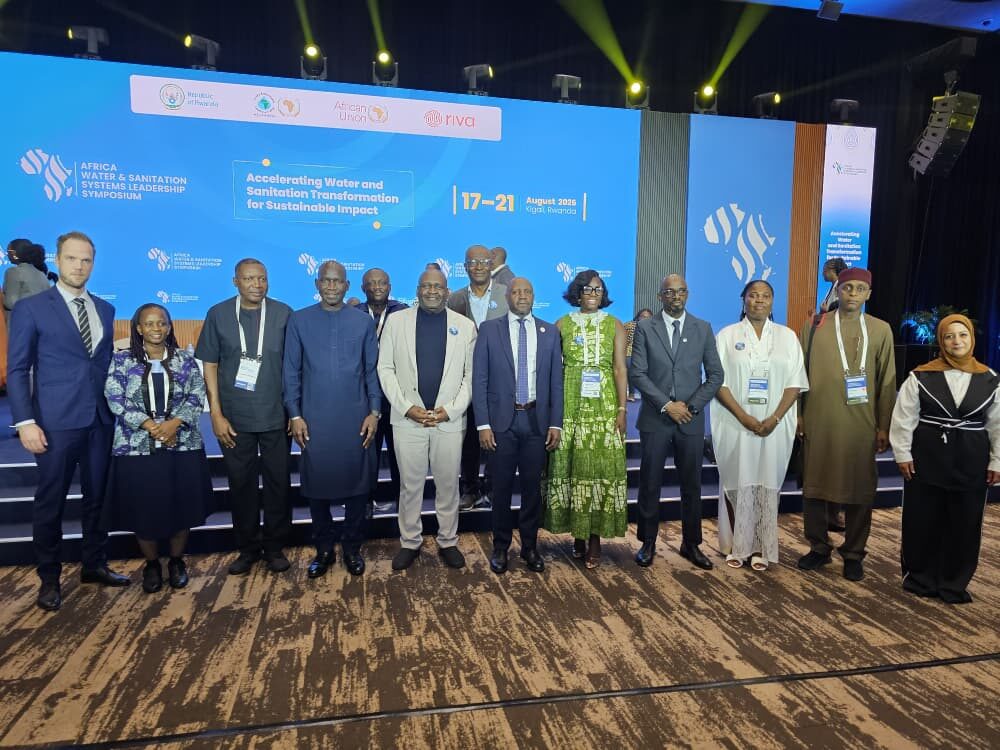
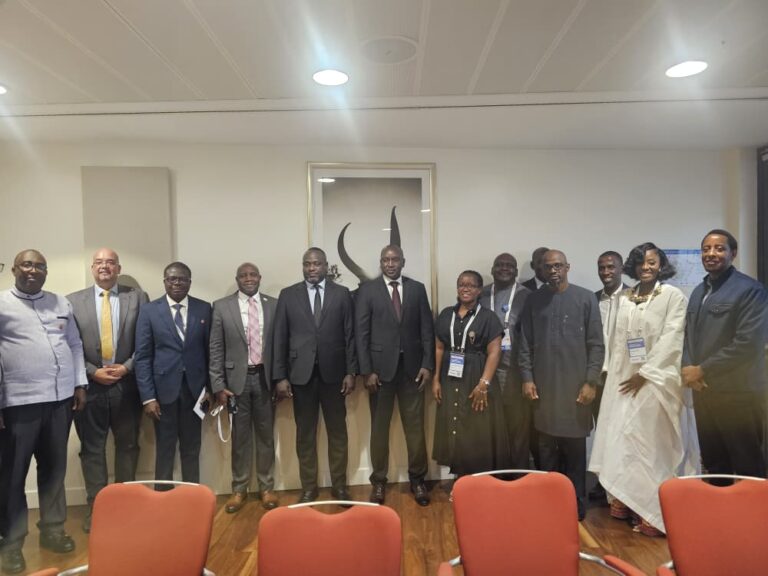
Water and Sanitation agenda took the centre stage in Kigali, capital city of Rwanda on Monday 17th August, 2026 with the formal opening of the Africa Water and Sanitation Systems Leadership Symposium 2026.
The high-level event brings together political leaders, ministers, regulators, utilities, development finance institutions, practitioners, innovators and development partners from across Africa and beyond.
The five-day symposium, taking place from 17 to 21 August 2026 at the Kigali Convention Centre, is convened by the African Ministers’ Council on Water (AMCOW), the African Union and the Government of Rwanda, with RIVA facilitating the gathering. It comes at a defining moment for Africa’s water and sanitation sector, with the continent seeking to translate high-level political commitments into functioning systems capable of delivering reliable, safe, inclusive and sustainable services.
The symposium is also taking place against the backdrop of the African Union’s designation of 2026 as the Year of Water, under the theme: “Assuring Sustainable Water Availability and Safe Sanitation Systems to Achieve the Goals of Agenda 2063.”
The continental focus has elevated water and sanitation from a sectoral concern to a strategic development priority, recognising its direct links to economic growth, public health, food security, energy, climate resilience and human development.


POLITICAL LEADERSHIP
The opening of the symposium brought high-level political leadership and actors to the centre of Africa’s water and sanitation conversation.
Rwanda’s Prime Minister, alongside the African Union Commissioner for Agriculture, Rural Development, Blue Economy and Sustainable Environment and the President of AMCOW, joined sector leaders and partners for the opening, signifying the important consideration for the continent’s water and sanitation agenda.
For the African Ministers’ Council on Water (AMCOW), the high-level participation is significant, given that the continent has already articulated a long-term ambition through the Africa Water Vision 2063 and Policy. The immediate challenge is implementation: ensuring that national and regional institutions have the capacity, finances, regulatory frameworks, data and accountability mechanisms required to turn commitments into results.


RWANDA’S MESSAGE: BUILD SYSTEMS, NOT JUST INFRASTRUCTURE
Host country, Rwanda placed the need for long-term systems thinking at the heart of the opening. The country’s Infrastructure Minister, Damien Murwanashyaka, underscored the distinction between constructing sustainable infrastructure and systems that can optimize services.
“Our challenge is not simply building more infrastructure; we must build reliable, safe, resilient, sustainable water and sanitation systems that can serve our growing population and economies over a long term,” Murwanashyaka said. This aptly captures one of the central focuses of the symposium, highlighting the fact that the Africa’s water and sanitation challenge cannot be addressed through infrastructure projects alone.
Pipelines, treatment facilities, toilets, water networks and other infrastructure must be supported by institutions capable of operating and maintaining them, financing systems capable of sustaining them, regulators capable of enforcing standards and professionals capable of delivering quality services. The challenge is therefore unmistakably systemic.

COMMITMENTS TO IMPLEMENTATION
Across the continent of Africa, governments have adopted ambitious water and sanitation policies and made commitments under the agenda 2063 and the Sustainable Development Goals. However, implementation had remained uneven.
The Kigali symposium provides a platform for countries to examine what is preventing commitments from becoming sustainable services and to identify practical reforms that can accelerate delivery.
Discussions have thus focused on political leadership, strategic public finance, regulation and accountability, professionalism, youth innovation and investment readiness.
The objective is to move beyond diagnosis towards country-led reforms and practical solutions.

BUILDING INVESTORS’ CONFIDENCE
As investment cannot be sustained where institutions are weak, regulatory frameworks are unpredictable or accountability systems are ineffective, a key conversation at the symposium is the role of regulation and accountability in making the water and sanitation sector investment-ready.
The symposium is also examining how legislative actors, civil society and cross-sectoral institutions can support regulatory reforms and strengthen accountability.
The underlying message is clear: Good regulation is not an obstacle to investment. It is one of the foundations of investor confidence.

FINANCING THE WATER AND SANITATION TRANSFORMATION
Financing remains one of the most critical questions facing Africa’s water and sanitation sector. But the Kigali discussions are also emphasising that investment readiness is more than money.
Governments must expand access while also maintaining existing infrastructure, adapting systems to climate pressures and responding to rapidly growing urban populations.
This requires stronger domestic resource mobilisation, more effective public expenditure and better alignment between public and private financing.
Investors need credible institutions, reliable data, transparent governance, predictable regulation and evidence that proposed investments can generate sustainable results.
The symposium therefore brings sector leaders into direct conversation with finance institutions, investors and development partners around the reforms required to unlock capital.

PROFESSIONALISING AFRICA’S WATER AND SANITATION SECTOR
Another major priority is professionalisation.
Reliable services depend on skilled people and capable institutions.
From utilities and regulators to municipalities and national ministries, African water and sanitation institutions need the technical, managerial and financial capabilities to plan, operate and sustain services.
Professionalisation is therefore being treated as a core component of sector reform rather than an administrative issue.
Building stronger institutions means investing in human capacity, strengthening performance management and creating an environment where water and sanitation professionals can deliver effectively.

YOUTH, INNOVATION AND THE FUTURE OF THE SECTOR
The Kigali symposium is also recognising the role of Africa’s young people in shaping the future of water and sanitation.
With Africa’s population and cities expanding rapidly, new approaches are required to address water scarcity, sanitation gaps, climate impacts, waste management and service delivery.
Youth-led innovation therefore forms part of the symposium’s agenda, creating opportunities for emerging innovators and enterprises to engage with governments, utilities, investors and development partners.
The aim is to move innovation from isolated ideas to solutions that can be tested, financed, adopted and scaled.

ADVANCING THE AFRICA WATER VISION 2063
At the heart of AMCOW’s engagement in Kigali is the Africa Water Vision 2063 and Policy.
The Vision provides a long-term continental framework for achieving water security and sustainable sanitation and for positioning water as a driver of Africa’s economic transformation and resilience.
Its ambitions extend beyond access to water and sanitation.
They include stronger governance, sustainable water resources management, climate resilience, improved financing, institutional strengthening, better data and inclusive participation. The task now is implementation.
The symposium provides an important platform for AMCOW, Member States, the African Union and partners to discuss how the vision can be translated into national action and measurable outcomes.

FROM KIGALI TO ACTION
The opening of the Africa Water and Sanitation Systems Leadership Symposium 2026 is therefore more than the start of a five-day gathering. It represents a renewed political commitment to addressing one of Africa’s most fundamental development challenges.
The continent needs water and sanitation systems that can withstand climate pressures, support growing economies, protect public health and provide reliable services to communities. That requires political leadership. It requires accountable institutions.
It requires effective regulation.
It requires professional capacity.
It requires sustainable financing.

And it requires investment.
As discussions continue in Kigali through 21 August, the ambition is to strengthen the bridge between policy and practice, commitment and implementation, and investment and impact.
The message emerging from Kigali is clear: Africa does not need another generation of commitments that remain on paper. The continent needs systems that work, institutions that deliver and investments that produce sustainable impact.

WhatsApp Image 2026-08-20 at 8.56.35 AM
News

AMCOW President Leads High-Level Engagement on Africa’s Common Water Position Ahead of Abu Dhabi

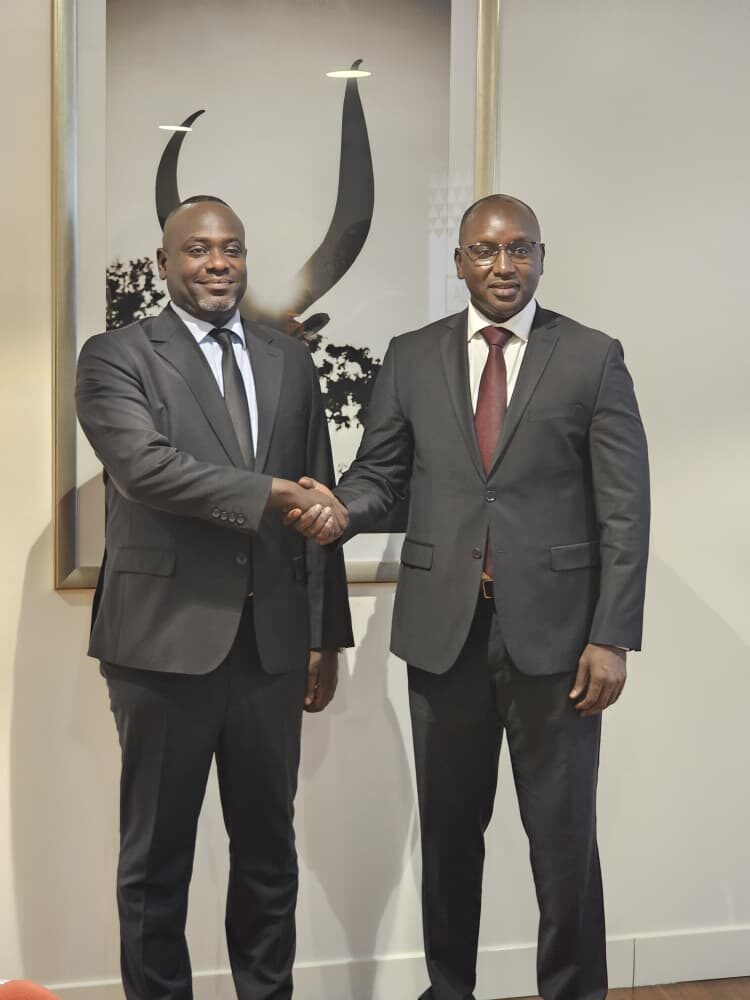
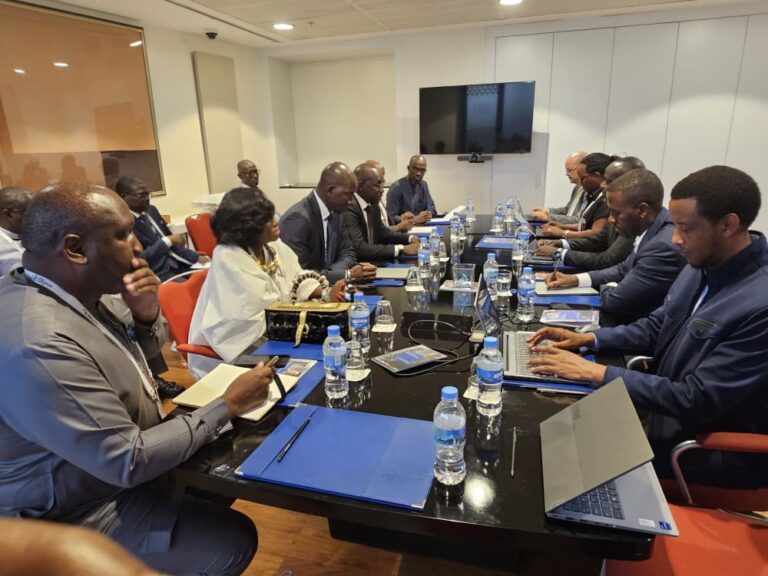
AMCOW President H E Dr. Cheikh Tidiane Dièye has led a high-level strategic engagement on the margins of the Africa Water & Sanitation Systems Leadership Symposium 2026 to advance Africa’s preparations for the 2026 UN Water Conference in Abu Dhabi.

The meeting brought together Rwanda’s Host Minister Damien Murwanashyaka; Harsen Nyambe, Director of Sustainable Environment and Blue Economy at the African Union, AMCOW’s Ag. Executive Secretary, Nelson Gomonda, and Dr. Juste Nansi, Director of RIVA Africa. Discussions focused on consolidating Africa’s priorities and developing a common continental position ahead of the global conference.

The 2026 UN Water Conference, co-hosted by the United Arab Emirates and Senegal, will take place in Abu Dhabi from 8–10 December 2026. Its overarching objective is to accelerate action towards SDG 6: clean water and sanitation for all. The Conference will feature six interactive dialogue areas: Water for People, Water for Prosperity, Water for Planet, Water for Cooperation, Water in Multilateral Processes, and Investments for Water.

Africa must speak with one voice

Dr. Dièye stressed the importance of Africa securing a stronger place on the global water agenda and arrive in Abu Dhabi with a unified voice and common position. He emphasised the need for Member States to align their priorities around the continent’s shared water and sanitation challenges, while strengthening Africa’s influence in global discussions on water security and sustainable development.


AU backs a common continental position
The AUC Director, Nyambe, received the key request from the engagement and affirmed the importance of Member States reaching consensus on an African Common position. He pledged the support of the African Union Commission to the process of consolidating and advancing this position ahead of Abu Dhabi, reinforcing stronger alignment between national priorities and continental commitments.

Rwanda pledges continued support

Rwanda’s Host Minister Damien Murwanashyaka reaffirmed the country’s support for the process, building on Rwanda’s successful hosting of the Kigali Leadership Symposium. The Minister’s commitment underscores the importance of sustaining the momentum generated in Kigali and translating the Symposium’s outcomes into concrete continental action.

The engagement also highlighted the role of RIVA Africa, represented by Dr. Juste Nansi, in providing evidence, knowledge, and practical approaches to transform Africa’s water and sanitation systems.

As Africa moves from Kigali to Abu Dhabi, AMCOW’s Ag. Executive Secretary, Mr. Nelson Gomonda reiterated the organisation’s readiness together with the African Union Commission, African Development Bank and other UN agencies champion stronger coordination among Member States and positioning the continent to advance a common agenda on water security, WASH, sanitation, climate resilience, and investment.

The message is clear: Africa must speak with one voice, and water must remain a priority on the global development agenda.

AMCOW president and AU commissioner
News

AMCOW President and AU Commisioner (ARBE) Push to Keep Water and Sanitation High on Africa’s Development Agenda

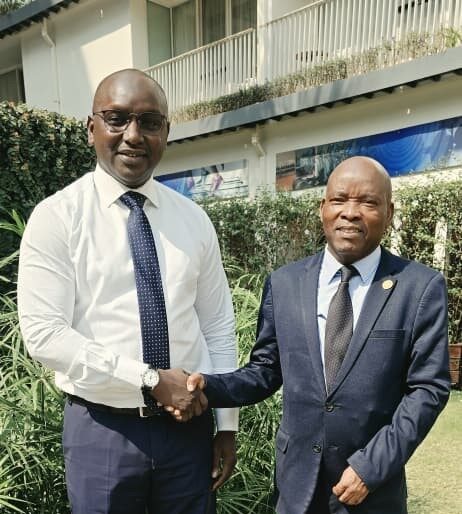
KIGALI, Rwanda – The President of the African Ministers’ Council on Water (AMCOW), H.E. Dr CHEIKH TIDIANE DIEYE, held a strategic meeting with the African Union Commissioner for Agriculture, Rural Development, Blue Economy and Sustainable Environment, H.E Moses Vilakati, to reinforce political commitment to water and sanitation across the continent.

The discussions held on the margins of the Africa Water and Sanitation Systems Leadership Symposium in Kigali, centered on sustaining political momentum beyond the declaration of 2026 as the AU Year on Water and Sanitation. The two leaders emphasised that the high-level commemoration of the AU Theme of the year 2026 on water and launch of Africa Water Vision 2063 and Policy must leave a lasting legacy, elevating the sector’s profile in the next decade and delivering benefits to the millions of Africans still without access to safe drinking water and decent sanitation.

The meeting directed the African Union Commission and AMCOW’s technical team to develop concrete, high-impact proposals that create an enabling environment for the implementation of the Vision statements and the related policy framework

The talks also covered preparations for the 2026 UN Water Conference in Abu Dhabi co-hosted by Senegal and the United Arab Emirates, and the 11th World Water Forum holding in Riyadh in 2027 including activities before, during and after these events. Both leaders agreed that Africa must approach the 2026 UN Water Conference with a unified voice firmly grounded in the Africa Water Vision and Policy.

The AMCOW President and AU Commissioner further stressed the importance of sustained political leadership and stronger institutional mechanisms to translate Africa’s water and sanitation priorities into tangible results on the ground.

amcow president briefing at symposium
News

President of AMCOW, H E Dr. Cheikh Tidiane DIÉYE, holds Working Session ahead of Kigali Water and Sanitation Symposium

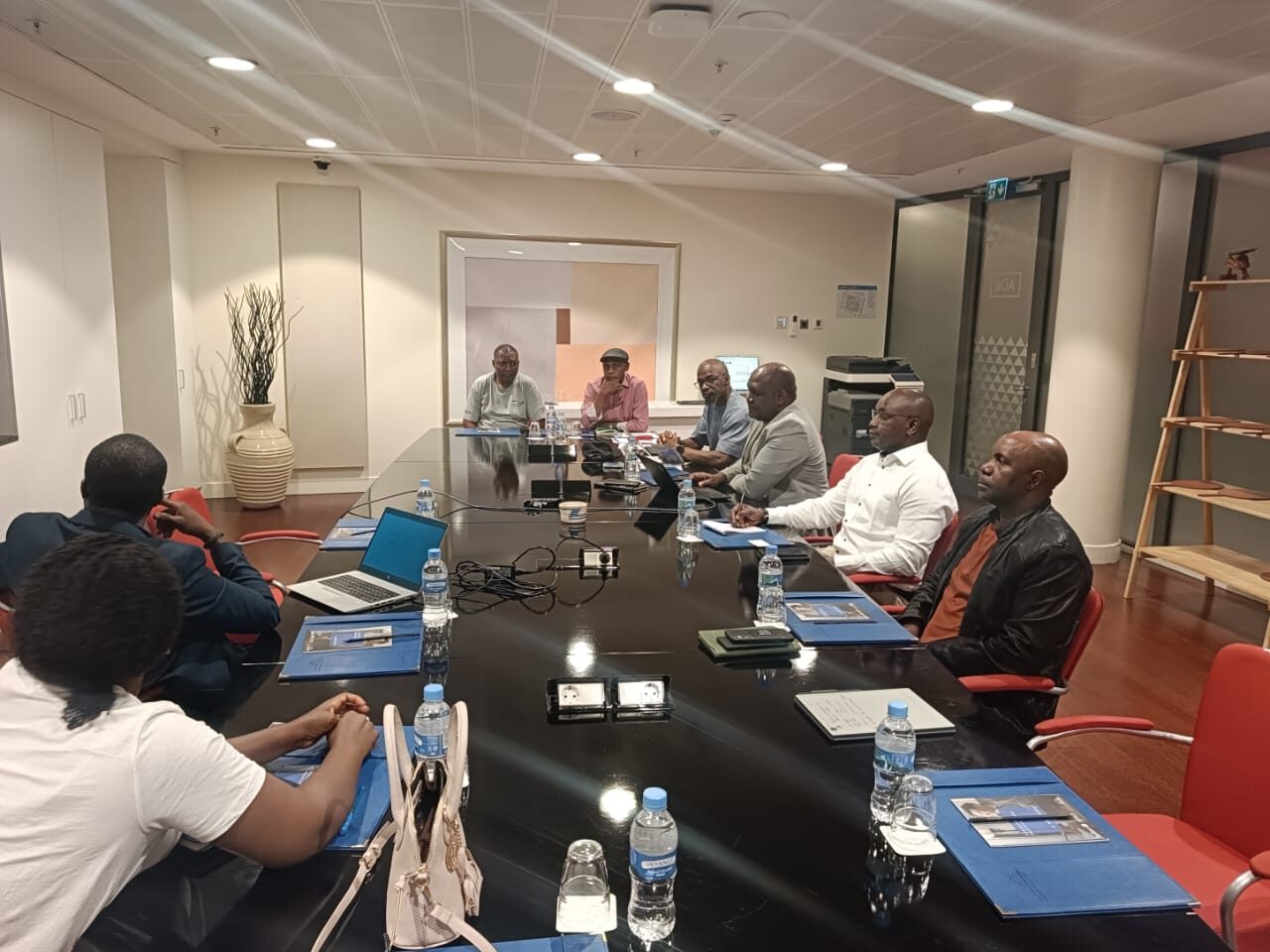
Kigali, Rwanda: The President of the African Ministers’ Council on Water (AMCOW), H E Dr. Cheikh Tidiane DIÉYE, upon his arrival in Kigali, Rwanda, held a working session in the evening of Sunday, 16 August 2026 with the African Union Commission, AMCOW Secretariat and representatives of RIVA.

The working session provided the opportunity for the technical team at African Union Commission (AUC), AMCOW and Riva to brief the AMCOW President on preparations for the 2026 Africa Water and Sanitation Systems Leadership Symposium, scheduled for 17–21 August 2026 in Kigali, Rwanda.

The AMCOW President, who is also Minister of Hydraulics and Sanitation of the Republic of Senegal, was happy that the Symposium is one of the key events to commemorate the African Union Theme of the Year 2026 on “Assuring Sustainable Water Availability and Safe Sanitation Systems to Achieve the Goals of Agenda 2063.” It also provides Africa with an opportunity to prepare for the 2026 UN Water Conference co-hosted by the Republic of Senegal and the United Arab Emirates from 8-10 December 2026 in Abu Dhabi.

The AMCOW President reaffirmed Senegal’s commitment to ensure vertical alignment between Africa’s water and sanitation priorities and Global water and sanitation agenda. He also highlighted the need to ensure that water and sanitation continue to receive the highest political attention towards the attainment of the aspirations and vision of Agenda 2063: The Africa we Want!

The AMCOW President emphasized the importance for developing and adopting the Africa Common Position and Priorities ahead of the 2026 UN Water Conference as well as the 11th World Water Forum.

He challenged the AUC and AMCOW Secretariat working with partners to think outside the box towards the implementation of the Africa Water Vision 2063 and Policy adopted by the Governing Council of AMCOW and endorsed at the 39th Ordinary Session of the Assembly of the African Union Heads of State and Government in February 2026.

Speaking during the working session, Director Harsen Nyambe Nyambe of the Sustainable Environment and Blue Economy Directorate at AUC assured the AMCOW President that the Commission is leading on the activities to commemorate the AU Theme of the Year 2026, jointly with Member States, AMCOW Secretariat, Regional Economic Communities, Regional Mechanisms and partners. He added that currently the focus is on implementing decisions taken at political level related to the development of the First Implementation Plan (2026-2033) for the Africa Water Vision 2063 and Policy.

The Acting Executive Secretary of AMCOW, Mr Nelson Gomona, informed the AMCOW President that the Africa Water and Sanitation Systems Leadership Symposium, convened under the Theme: Accelerating Water and Sanitation Transformation for Sustainable Impact brings together Ministers responsible for water affairs and sanitation, finance, planning and environment; mayors and local authorities; regulators; utility and service provider executives; development finance institutions and banks; Regional Economic Communities; United Nations agencies; research institutions, civil society, the private sector and young water professionals. Discussions during the Symposium will focus on four pillars— leadership, regulation and accountability, professionalisation, and strategic public finance.

In conclusion, the AMCOW President called upon the AUC, AMCOW Secretariat and Riva to support his office in ensuring that the Symposium. In his words, success will be measured in institutional strengthening of AMCOW, accelerated implementation of the Africa Water Vision 2063 and Policy, and that the AU Theme of 2063 leaves a lasting legacy that will continue to raise the profile of the sector for years to come, for  the benefit of the millions of Africans who lack access to safe drinking water and decent sanitation.


Le Président de l'AMCOW, S.E. le Dr Cheikh Tidiane DIÉYE, a tenu une séance de travail en amont du Symposium de Kigali sur l'eau et l'assainissement  

Kigali, Rwanda – Dès son arrivée à Kigali, au Rwanda, le Président du Conseil des ministres africains chargés de l’eau (AMCOW), Son Excellence le Dr Cheikh Tidiane Diéye, a tenu une séance de travail dans la soirée du dimanche 16 août 2026 avec la Commission de l’Union africaine, le Secrétariat de l’AMCOW et des représentants de RIVA.

Cette séance a permis à l’équipe technique de la Commission de l’Union africaine (CUA), de l’AMCOW et de RIVA d’informer le Président de l’AMCOW de l’état des préparatifs du Symposium africain sur le leadership des systèmes d’eau et d’assainissement 2026, prévu du 17 au 21 août 2026 à Kigali.

Également ministre de l’Hydraulique et de l’Assainissement de la République du Sénégal, le Président de l’AMCOW s’est félicité que ce Symposium figure parmi les événements phares commémorant le thème de l’Union africaine pour l’année 2026 : « Garantir la disponibilité durable de l’eau et des systèmes d’assainissement sûrs pour atteindre les objectifs de l’Agenda 2063 ». Il constitue également, pour l’Afrique, une occasion de se préparer à la Conférence des Nations Unies sur l’eau de 2026, coorganisée par la République du Sénégal et les Émirats arabes unis, du 8 au 10 décembre 2026 à Abou Dhabi.

Le Président de l’AMCOW a réaffirmé l’engagement du Sénégal à garantir l’alignement vertical entre les priorités africaines en matière d’eau et d’assainissement et l’agenda mondial dans ce domaine. Il a par ailleurs souligné la nécessité de veiller à ce que l’eau et l’assainissement continuent de bénéficier de la plus haute attention politique, au service des aspirations et de la vision de l’Agenda 2063 : « L’Afrique que nous voulons ! »

Il a insisté sur l’importance d’élaborer et d’adopter une position commune ainsi que des priorités africaines en amont de la Conférence des Nations Unies sur l’eau de 2026 et du 11ᵉ Forum mondial de l’eau.

Il a également invité les secrétariats de la Commission de l’Union africaine et de l’AMCOW, en collaboration avec leurs partenaires, à sortir des sentiers battus pour mettre en œuvre la Vision africaine de l’eau à l’horizon 2063 et sa politique connexe, adoptées par le Conseil d’administration de l’AMCOW et approuvées lors de la 39ᵉ session ordinaire de l’Assemblée des chefs d’État et de gouvernement de l’Union africaine, en février 2026.

S’exprimant lors de la séance de travail, le Directeur Harsen Nyambe Nyambe, de la Direction de l’environnement durable et de l’économie bleue de la Commission de l’Union africaine, a assuré au Président de l’AMCOW que la Commission mène, en collaboration avec les États membres, le Secrétariat de l’AMCOW, les communautés économiques régionales, les mécanismes régionaux et les partenaires, les activités visant à célébrer le thème de l’année 2026 de l’Union africaine. Il a précisé que l’accent est actuellement mis sur la mise en œuvre des décisions prises au niveau politique concernant l’élaboration du Premier plan de mise en œuvre (2026-2033) de la Vision africaine de l’eau à l’horizon 2063 et sa politique connexe.

Le Secrétaire exécutif par intérim de l’AMCOW, M. Nelson Gomona, a informé le Président de l’AMCOW que le Symposium africain sur le leadership des systèmes d’eau et d’assainissement, placé sous le thème « Accélérer la transformation de l’eau et de l’assainissement pour un impact durable », réunira des ministres chargés de l’eau, de l’assainissement, des finances, de la planification et de l’environnement ; des maires et autorités locales ; des régulateurs ; des dirigeants de services publics et de prestataires de services ; des institutions financières de développement et des banques ; des communautés économiques régionales ; des agences des Nations Unies ; ainsi que des instituts de recherche, la société civile, le secteur privé et de jeunes professionnels du secteur de l’eau. Les discussions s’articuleront autour de quatre piliers : le leadership, la réglementation et la redevabilité, la professionnalisation, et les finances publiques stratégiques.

En conclusion, le Président de l’AMCOW a appelé la Commission de l’Union africaine, le Secrétariat de l’AMCOW et RIVA à soutenir son Bureau afin de garantir le succès du Symposium. Selon lui, ce succès se mesurera au renforcement institutionnel de l’AMCOW, à la mise en œuvre accélérée de la Vision africaine de l’eau à l’horizon 2063 et sa politique connexe, ainsi qu’à la capacité du thème de l’Union africaine pour 2026 à laisser un héritage durable, continuant de rehausser la visibilité du secteur pendant de nombreuses années, au bénéfice des millions d’Africains n’ayant toujours pas accès à l’eau potable ni à un assainissement décent.

WhatsApp Image 2026-08-12 at 1.04.46 PM (1)
News

AMCOW Secretariat Briefs Nigeria’s Water Minister Ahead of Kigali Symposium

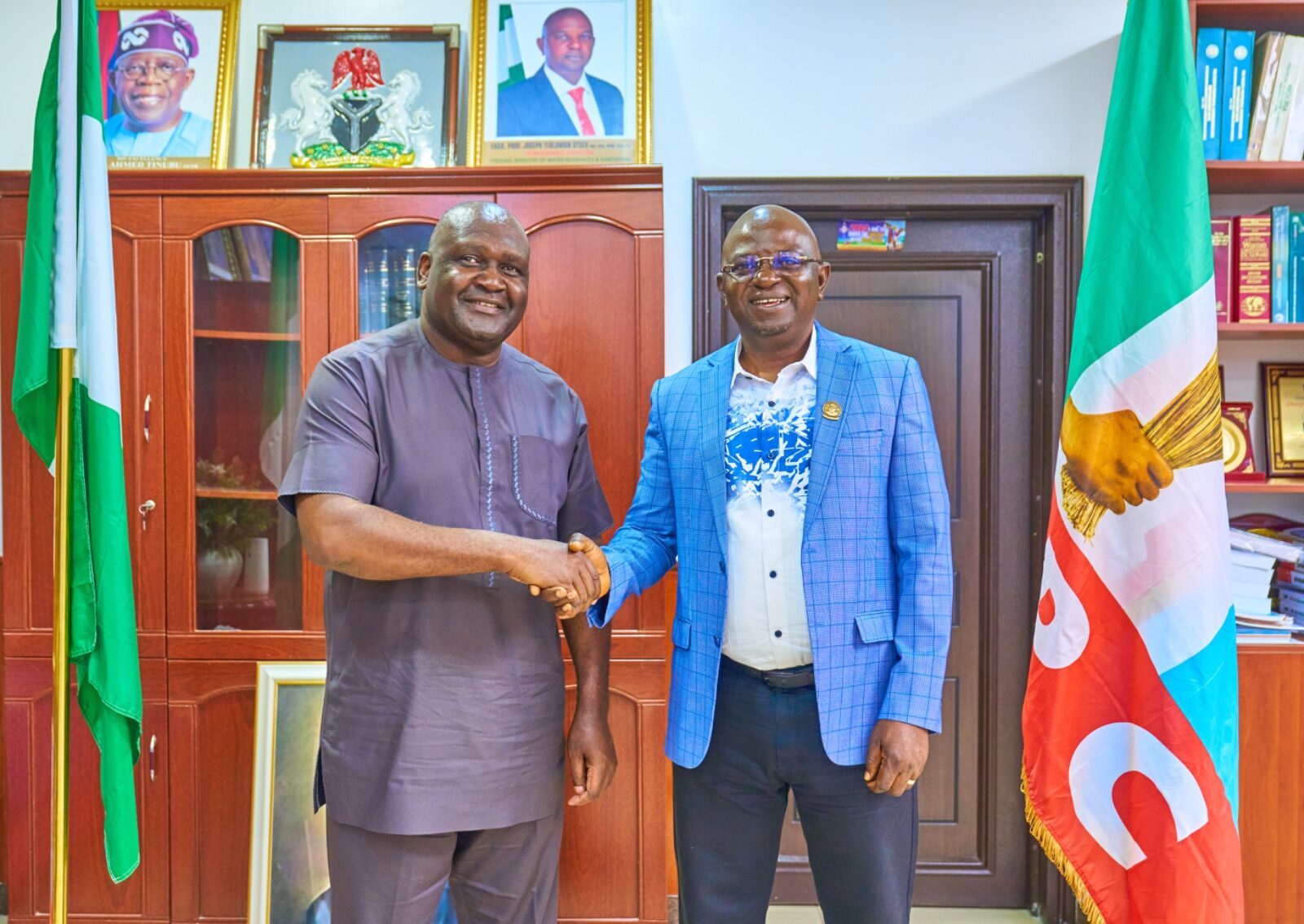
Abuja, Nigeria: The AMCOW Secretariat has briefed the Honourable Minister of Water Resources and Sanitation and Vice-President of AMCOW for West Africa, Engr. Prof. Joseph Terlumun Utsev, on preparations for the 2026 Africa Water and Sanitation Systems Leadership Symposium, scheduled for 17–21 August in Kigali, Rwanda.

The Minister reaffirmed Nigeria’s commitment to advancing Africa’s water and sanitation agenda, highlighting the importance of Nigeria’s participation, peer learning, leadership, investment readiness, and the development of Africa’s common position ahead of the 2026 UN Water Conference in Abu Dhabi.

Prof. Utsev also reiterated Nigeria’s support for AMCOW as host country of its Secretariat and its efforts to implement the Africa Water Vision 2063.

AMCOW Acting Executive Secretary, Mr. Nelson Gomonda, commended Nigeria’s leadership in West Africa and expressed confidence in continued collaboration towards achieving universal access to safe water, meeting growing water demands, promoting responsible use of aquatic resources, and strengthening transboundary water cooperation and institutional accountability across Africa.

#AWSSLS2026 #AMCOW #WaterForAfrica

Jobs

Recruitment of AMCOW Executive Secretary

ENGLISH

Organization:

African Ministers’ Council on Water (AMCOW)

Title:

Executive Secretary

Job Function:


The Executive Secretary will be based at the AMCOW Secretariat in Abuja, Federal Republic of Nigeria. The successful candidate must have an excellent understanding of the institutional framework for the water and sanitation sector in Africa. The candidate, who will work with a wide range of stakeholders, must be a dynamic political mobilizer, an inspiring leader, and a manager with integrity, credibility, and strategic vision necessary to thrive in a complex, multicultural, and constantly evolving environment. The candidate must demonstrate a proven ability to build, maintain, and strengthen trust among member states, technical and financial partners, regional institutions, staff, and other stakeholders. He or she must promote an institutional culture based on mutual respect, social dialogue, inclusion, transparency, accountability, ethical values, and the highest standards of governance.

The candidate must also have a recognized professional reputation, demonstrate unifying leadership that fosters a healthy, respectful, and high-performing work environment, and show a proven ability to preserve AMCOW’s institutional credibility, strengthen the trust of development partners, and sustainably mobilize their support for the Organization’s strategic priorities.

The candidate must be able to represent AMCOW with authority and credibility before heads of state and government, ministers, heads of continental institutions, technical and financial partners, and international organizations, in order to strengthen AMCOW’s position, not only as the leading institution but also as a platform for policy dialogue, and a body that sets continental priorities for the African water and sanitation sector.

The Executive Secretary must at all times uphold the principles of neutrality, independence, and impartiality when dealing with Member States and partners, particularly in the context of disputes or sensitive issues.

Classification :

Grade : D1 or D2

Date : July 1, 2026

About AMCOW


AMCOW is an inter-governmental, Pan-African, non-budgetary institution.   AMCOW serves as a Ministerial Sectoral Committee for Water and Sanitation under the Specialized Technical Committee (STC) on Agriculture, Rural Development, Blue Economy, Water and Environment (ARBWE) of the African Union (AU).

AMCOW’s mission is to provide political leadership, policy direction and advocacy in the provision, use and management of water resources for sustainable social and economic development and maintenance of African ecosystems… For more information, refer to: https://www.amcow-online.org/.


Duties and Responsibilities :

AMCOW is the continent’s policy and decision-making body on water and sanitation. The Executive Secretary serves as secretary to this body and is primarily responsible for liaising with all ministers in charge of water and sanitation affairs across the continent, as well as with other key stakeholders, in the performance of his or her duties.


The Executive Secretary, as the senior official reporting to the Governing Council, ensures effective alignment between AMCOW’s strategic directions and its delivery of the work programme.


The specific areas of responsibility necessary for the effective performance of this role are outlined below:


·       Strategic direction and external relations.

·       Program implementation and operational management.

·       Institutional capacity building.

·       Support for the Governing Council to strengthen governance.


1.     Strategic Direction and External Relations:


  • In close collaboration with the Governing Council, provide leadership in developing and implementing the organization’s mission and strategic direction.
  • Clearly articulate AMCOW’s strategic directions and secure buy-in from a broad range of internal and external stakeholders.
  • Lead the development of innovative approaches to leverage AMCOW’s brand within the African stakeholder landscape to mobilize resources.
  • Embody credibility and legitimacy as the organization’s primary spokesperson on all issues.
  • Provide leadership in developing long-term strategies and short-term strategic operational plans aligned with continental and global agendas in the water and sanitation sector.


2.     Program Implementation and Operational Management:


  • Lead the implementation of the organization’s strategy: effectively translate the organization’s strategic priorities into multi-year and annual work programs that are properly aligned with the budget and develop strategies for any necessary adjustments.
  • Lead and guide the organization’s day-to-day operations.
  • Oversee the implementation of AMCOW’s risk management strategy, ensuring that institutional, programmatic, and operational risks—including business continuity risk—are identified, managed, and mitigated.
  • Define and ensure the organization’s ethical standards, culture, and institutional commitment to zero tolerance for corruption, financial mismanagement, and any other form of professional misconduct.
  • Lead and embody the organization’s commitment to inclusion and tolerance in its vision, program implementation, and institutional operations.
  • Actively promote and foster an environment conducive to excellence in the performance of AMCOW’s staff and stakeholders.
  • Lead the development and implementation of strategies for resource mobilization and the organization’s financial sustainability.


3.     Institutional Capacity Building:


  • Ensure that all aspects of the organization’s capacity are properly designed, adequately resourced, and of sufficient quality to effectively achieve results at both the organizational and program levels.
  • Ensure that the organization has effective systems in place to implement and monitor its project portfolio.
  • Promote the integration of gender perspectives into both programs and operations.
  • Ensure that the organization has an appropriate mix of high-quality talent to meet current and emerging needs; strive to motivate and retain talent through effective human resources management practices.
  • Promote an organizational culture aligned with AMCOW’s mandate, values and strategic direction.


4.     Support the Governing Council in strengthening governance:


  • Ensure that the Governing Councl receives appropriate management support to effectively fulfill its oversight responsibilities.
  • Provide leadership in implementing the Governing Council’ decisions.
  • Regularly brief the Governing Council on the organization’s risk management efforts, including strategic and operational risks.


Reporting Structure


The Executive Secretary reports to the AMCOW President, who chairs the Executive Committee (EXCO) and the General Assembly (GA)

Qualifications and Experience:

·       The candidate must hold a postgraduate degree (Ph.D. or master’s) in one or more of the following fields: natural resource management, environmental sciences, public administration, water resources engineering/management, law, development, economics, social sciences, and/or an equivalent discipline.

·       The candidate must demonstrate impeccable integrity and adhere to the highest ethical standards, with no proven history of fraud, corruption, harassment, or any other serious misconduct. Any prior disciplinary action or the outcome of a formal investigation may constitute grounds for ineligibility and must be fully disclosed during the recruitment process. AMCOW reserves the right to verify this information through background and reference checks prior to any appointment. The candidate must have at least fifteen (15) years of relevant experience in a senior management position, with significant experience in the design and development of organizational policies and strategies, preferably within an African or international development organization.

·       The candidate must demonstrate measurable achievements over the past five to ten years, particularly in the areas of mobilizing financial resources, improving institutional performance, implementing organizational reforms, increasing the organization’s international visibility, and enhancing governance mechanisms, among others.

·       The candidate must possess a track record demonstrating management in accordance with the principles of good governance, a lack of disciplinary sanctions, financial management deemed satisfactory by audit bodies, and the absence of documented conflicts of interest, among other criteria.

·       The candidate must demonstrate that they have personally led the mobilization of significant resources for the benefit of a regional or international organization.

·       Proven experience in effective leadership and managing teams with diverse professional backgrounds and experiences.

·       In-depth experience with international, regional, and national policy processes related to water resource management, sanitation, and the environment.

·       A deep and proven understanding of water and sanitation issues in Africa.

·       Proven experience in addressing current development issues across Africa, as well as an active network of partnerships and collaborations with the African water and sanitation sectors.

·       A strong track record in mobilizing resources for development, and an excellent understanding of the resource mobilization landscape (development partners, philanthropy, the private sector, and various stakeholders in Africa).

·       Excellent advocacy and strong negotiation skills.

·       Excellent political and diplomatic skills, as well as good situational judgment.

·       Exceptional communication skills to persuade, inspire, and mobilize all stakeholders around AMCOW’s vision and mission.

·       Proven ability to identify organizational challenges and act as a change agent to address them.

·       The candidate must have significant, relevant, and direct practical experience gained in Africa.


Language and Employment Requirements:

·       Fluency in English and French is essential.

·       Proficiency in Portuguese and/or Arabic would be an asset.

·       A letter of recommendation from a previous employer.

·       The candidate must provide three professional references.


Tenure of Appointment:


The position will be filled under a four (4)-year fixed-term contract, with the first six months considered a probationary period.

Remuneration :


Competitive compensation in line with continental standards and consistent with AMCOW’s employment conditions.


Citizenship Requirements

Only nationals of African Union member states are eligible to apply.

AMCOW’s Equal Opportunity Policy states the following: We recruit, hire, train, and promote individuals in all job categories without regard to race, color, religion, national origin, sex, age, disability, or any other protected status.


How to Apply:

Interested candidates are invited to email their resume to the address below, along with a cover letter explaining how they meet the job requirements, as well as certified copies of their diplomas and certificates. The deadline for submission is July 31, 2026. Female candidates are highly encouraged to apply.


The Chair

Appointment, Promotion, and Recruitment Committee (APRC)

African Ministers’ Council on Water (AMCOW)

No. 15, Thomas Sankara Street, Asokoro District

Abuja, Nigeria.

Email: info@amcow-online.org


Please note that only shortlisted candidates will be contacted.


Download Job Advert (pdf)

FRANÇAIS

Organisation :

Conseil des ministres africains chargés de l’eau (AMCOW)

Titre :

Secrétaire exécutif

Fonctions :


Le Secrétaire exécutif sera basé au secrétariat de l’AMCOW à Abuja (Nigeria). Le/la candidat (e) retenu (e), qui travaillera avec un large éventail de parties prenantes, devra être un (e) mobilisateur/mobilisatrice politique, un leader inspirant et un (e) gestionnaire doté (e) d’un dynamisme, de l’intégrité, la crédibilité et la vision stratégique nécessaires pour réussir dans un environnement complexe, multiculturel et en constante évolution. Le candidat devra démontrer une capacité avérée à instaurer, maintenir et renforcer la confiance des États membres, des partenaires techniques et financiers, des institutions régionales, du personnel et des autres parties prenantes. Il devra promouvoir une culture institutionnelle fondée sur le respect mutuel, le dialogue social, l’inclusion, la transparence, la redevabilité, l’éthique et les plus hauts standards de gouvernance.

Il devra également justifier d’une réputation professionnelle reconnue, d’un leadership fédérateur favorisant un climat de travail sain, respectueux et performant, ainsi que d’une aptitude démontrée à préserver la crédibilité institutionnelle de l’AMCOW, à renforcer la confiance des partenaires de développement et à mobiliser durablement leur soutien au profit des priorités stratégiques de l’Organisation.

Le candidat devraêtre capable de représenter l’AMCOW avec autorité et crédibilité auprès des chefs d’État et de gouvernement, des ministres, des institutions continentales, des partenaires techniques et financiers ainsi que des organisations internationales, afin de renforcer la position de l’AMCOW en tant qu’institution de référence pour le secteur africain de l’eau et de l’assainissement, plateforme de dialogue politique et organisme définissant les priorités continentales.

Le/la Secrétaire exécutif(ve) doit respecter en tout temps les principes de neutralité, d’indépendance et d’impartialité dans les relations entre États membres et partenaires, en particulier dans les contextes de différends ou de questions sensibles.

Classification :

Grade : D1 ou D2

Date :1er juillet 2026

À propos de l’AMCOW


L’AMCOW est une institution intergouvernementale, panafricaine et non budgétaire. L’AMCOW est un mécanisme d’exécution en matière d’eau et d’assainissement pour le Comité technique spécialisé (CTS) sur l’agriculture, le développement rural, l’économie bleue et l’environnement durable (ARBE) de l’Union africaine (UA).

L’AMCOW a pour mission de promouvoir la coopération, la sécurité, le développement social et économique ainsi que la réduction de la pauvreté parmi les États membres grâce à une gestion efficace des ressources en eau du continent et à la fourniture de services d’approvisionnement en eau et d’assainissement. Elle est chargée d’assurer le leadership politique dans la mise en œuvre de la Vision africaine de l’eau 2063 et des volets liés à l’eau de l’Agenda 2063 de l’Union africaine. Pour plus d’informations, consultez : https://www.amcow-online.org/.


Fonctions et responsabilités :

L’AMCOW est la plus haute instance décisionnelle du continent en matière d’eau et d’assainissement. Le Secrétaire exécutif assumera les fonctions de secrétaire de cette instance et sera tenu d’assurer la liaison avec tous les ministres chargés de l’eau et de l’assainissement du continent, ainsi qu’avec d’autres parties prenantes clés dans l’exercice de ses fonctions.


Le Secrétaire exécutif, en sa qualité de haut responsable hiérarchique relevant du Conseil d’administration, veillera à assurer une articulation efficace entre les orientations stratégiques de l’AMCOW et ses activités opérationnelles.


Les domaines spécifiques de responsabilité nécessaires à l’exercice efficace de cette fonction sont détaillés ci-dessous :


·       Orientation stratégique et relations extérieures.

·       Mise en œuvre des programmes et direction opérationnelle.

·       Renforcement des capacités institutionnelles.

·       Soutien au Conseil d’administration pour une gouvernance renforcée.


1.     Orientation stratégique et relations extérieures :


  • En étroite collaboration avec le Conseil d’administration, assurer le leadership dans l’élaboration et la mise en œuvre de la mission et de l’orientation stratégique de l’organisation.
  • Exposer clairement la vision, la mission et les orientations stratégiques de l’AMCOW et obtenir l’adhésion d’un large éventail de parties prenantes internes et externes.
  • Diriger l’élaboration d’approches innovantes visant à tirer parti de l’image de marque de l’AMCOW au sein du paysage des parties prenantes africaines afin de mobiliser des ressources.
  • Incarner la crédibilité et la légitimité en tant que porte-parole principal de l’organisation sur toutes les questions.
  • Assurer le leadership dans l’élaboration de stratégies à long terme et de plans opérationnels stratégiques à court terme, alignés sur les agendas continentaux et mondiaux du secteur de l’eau et de l’assainissement.


2.     Mise en œuvre des programmes et direction opérationnelle :


  • Diriger la mise en œuvre de la stratégie de l’organisation : traduire efficacement les priorités stratégiques de l’organisation en programmes de travail annuels correctement alignés sur l’enveloppe budgétaire et élaborer des stratégies pour tout ajustement nécessaire.
  • En tant que Directeur général, diriger et orienter les opérations quotidiennes de l’organisation.
  • Superviser la mise en œuvre de la stratégie de gestion des risques de l’AMCOW, en veillant à ce que les risques institutionnels, programmatiques et opérationnels, y compris le risque lié à la continuité des activités, soient identifiés, gérés et atténués.
  • Définir la ligne de conduite éthique, la culture et l’engagement institutionnel de l’organisation en faveur d’une tolérance zéro envers la corruption, la mauvaise gestion financière et toute autre forme de faute professionnelle.
  • Diriger et incarner l’engagement de l’organisation en faveur de l’inclusion et de la tolérance dans sa vision, la mise en œuvre de ses programmes et son fonctionnement institutionnel.
  • Promouvoir et favoriser activement un environnement propice à l’excellence des performances du personnel et des parties prenantes de l’AMCOW.
  • Diriger l’élaboration et la mise en œuvre des stratégies de mobilisation des ressources et de viabilité financière de l’organisation.


3.     Renforcement des capacités institutionnelles :


  • Veiller à ce que tous les aspects des capacités de l’organisation soient correctement conçus, dotés des ressources nécessaires et d’une qualité suffisante pour permettre d’atteindre efficacement les résultats tant au niveau de l’organisation que des programmes.
  • Veiller à ce que l’organisation dispose de systèmes efficaces pour mettre en œuvre et suivre son portefeuille de projets.
  • Promouvoir l’intégration de la dimension de genre tant dans les programmes que dans les opérations.
  • Veiller à ce que l’organisation dispose d’un mélange adéquat de talents de qualité pour répondre aux besoins actuels et émergents ; s’efforcer de motiver et de fidéliser les talents grâce à des pratiques efficaces de gestion des ressources humaines.
  • Promouvoir une culture organisationnelle en accord avec les valeurs et l’orientation stratégique de l’AMCOW.


4.     Soutenir le Conseil d’administration pour une gouvernance renforcée :


  • Veiller à ce que le Conseil d’administration bénéficie d’un soutien de gestion approprié pour s’acquitter efficacement de ses responsabilités de supervision.
  • Assurer le leadership dans la mise en œuvre des décisions du Conseil d’administration.
  • Informer régulièrement le Conseil d’administration des efforts de l’organisation en matière de gestion des risques, y compris les risques stratégiques et opérationnels.


Hiérarchie


Le Secrétaire exécutif rend compte au président de l’AMCOW, qui préside le Comité exécutif (EXCO) et l’Assemblée générale (AG)

Qualifications et expérience :

·       Le/la candidat (e) devra être titulaire d’un diplôme de troisième cycle (doctorat ou master) dans un ou plusieurs des domaines suivants : gestion des ressources naturelles, sciences de l’environnement, administration publique, ingénierie/gestion des ressources en eau, droit, développement, économie, sciences sociales et/ou discipline équivalente.

·       Le/la candidat(e) doit démontrer une intégrité irréprochable et respecter les normes d’éthique les plus élevées, sans antécédents avérés de fraude, de corruption, de harcèlement ou de toute autre faute grave. Toute sanction disciplinaire antérieure ou tout résultat d’enquête formelle pourra constituer un motif d’inéligibilité et devra être pleinement divulgué dans le cadre du processus de recrutement. L’AMCOW se réserve le droit de vérifier ces informations par des contrôles d’antécédents et de références avant toute nomination.Le/ candidat (e) doit  avoir au moins   quinze (15) annéesd’expérience pertinente à un poste de haute direction, avec une expérience significative dans la conception et l’élaboration de politiques et de stratégies organisationnelles, de préférence au sein d’une organisation africaine ou internationale de développement.

·       Le/la candidat (e) devra démontrer des réalisations mesurables durant les cinq à dix dernières années, notamment en matière de mobilisation de ressources financières, d’amélioration des performances institutionnelles, de mise en œuvre de réformes organisationnelles, de l’accroissement de la visibilité internationale de l’organisation, amélioration des mécanismes de gouvernance, etc.

·       Le/la candidat (e) devra présenter un historique démontrant une gestion conforme aux règles de bonne gouvernance, une absence de sanctions disciplinaires, une gestion financière jugée satisfaisante par les organes d’audit, une absence de conflits d’intérêt documentés, etc.

·       Le/la candidat (e) devra justifier avoir conduit personnellement la mobilisation de ressources d’un montant significatif au bénéfice d’une organisation régionale ou internationale.

·       Expérience avérée en matière de leadership efficace et de gestion d’équipes aux profils et expériences professionnelles variés.

·       Expérience approfondie des processus politiques internationaux, régionaux et nationaux liés à la gestion des ressources en eau, à l’assainissement et à l’environnement.

·       Une compréhension approfondie et avérée des enjeux liés à l’eau et à l’assainissement en Afrique.

·       Une expérience avérée dans le traitement de questions d’actualité en matière de développement à travers l’Afrique, ainsi qu’un réseau actif de partenariats et de collaborations avec les secteurs africains de l’eau et de l’assainissement.

·       De solides antécédents en matière de mobilisation de ressources pour le développement, et une excellente compréhension de la typologie du paysage de la mobilisation des ressources (partenaires de développement, philanthropie, secteur privé et diverses parties prenantes en Afrique).

·       Excellentes compétences en matière de plaidoyer et solides aptitudes à la négociation.

·       Excellentes compétences politiques et diplomatiques, ainsi qu’un sens aigu du discernement.

·       Des compétences de communication exceptionnelles pour persuader, inspirer et mobiliser toutes les parties prenantes autour de la vision et de la mission de l’AMCOW.

·       Capacité avérée à identifier les défis organisationnels et à agir en tant qu’acteur du changement pour y répondre.

·       Le candidat doit posséder une expérience pratique significative, pertinente et directe acquise en Afrique.


Exigences linguistiques et emploi:

·       Une maîtrise parfaite de l’Anglais et du français) est indispensable.

·       La maîtrise du portugais et/ou de l’arabe serait un atout.

·       Une attestation de satisfaction du précédent employeur.

·       Le/la candidat(e) avoir trois références professionnelles.

Durée du contrat :


Le poste sera pourvu dans le cadre d’un contrat à durée déterminée de quatre (4) ans, dont les six premiers mois seront considérés comme une période d’essai.

Rémunération :


Une rémunération compétitive selon les normes continentales et conforme aux conditions d’emploi du personnel de l’AMCOW.


Conditions de nationalité

Seuls les ressortissants des États membres de l’Union africaine sont autorisés à postuler.

 La politique d’égalité des chances de l’AMCOW prévoit ce qui suit : nous recrutons, embauchons, formons et promouvons des personnes dans toutes les catégories d’emploi sans distinction de race, de couleur, de religion, d’origine nationale, de sexe, d’âge, de handicap ou de tout autre statut protégé.


Comment postuler :

Les candidats intéressés sont invités à envoyer leur CV par e-mail à l’adresse ci-dessous, accompagné d’une lettre de motivation expliquant en quoi ils correspondent au profil recherché, ainsi que des copies certifiées conformes de leurs diplômes et certificats. La date limite de dépôt des candidatures a été repoussée au 31 juillet 2026. Les candidatures féminines sont particulièrement encouragées.


Le président

Comité de nomination, de promotion et de recrutement (APRC)

Conseil des ministres africains chargés de l’eau (AMCOW)

N° 15, rue Thomas Sankara, district d’Asokoro

Abuja, Nigeria.

E-mail : info@amcow-online.org


Veuillez noter que seuls les candidats présélectionnés seront contactés


Télécharger l’offre d’emploi (pdf)

AUC-AMCOW visit to NG minister
News

NIGERIA’S MINISTER OF WATER RESOURCES AND SANITATION HOSTS THE AFRICAN UNION COMMISSION AND AMCOW DELEGATION

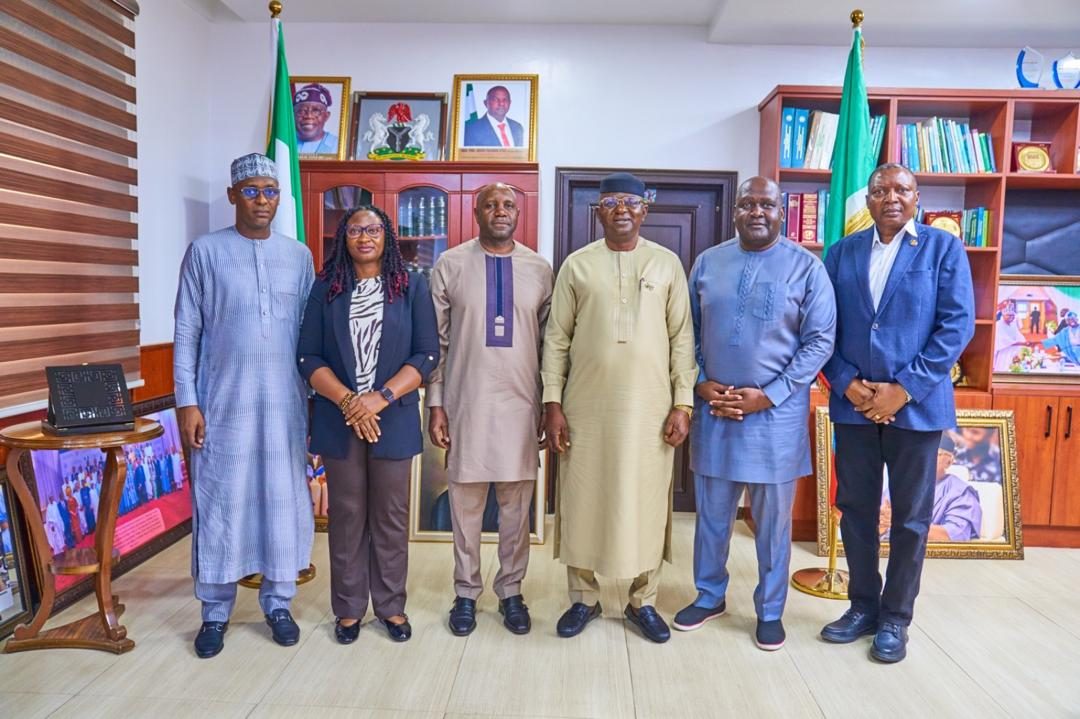
The Minister of Water Resources and Sanitation of the Federal Republic of Nigeria, Eng Prof Joseph Terlumun Utsev, FNSE, welcomed a delegation comprising the African Union Commission and the AMCOW Secretariat on Monday, 20 April 2026, in Abuja, Federal Capital Territory.

Leading the delegation was Director for Sustainable Environment and Blue Economy (SEBE), Harsen Nyambe Nyambe, from the African Union Commission and the Officer-In-Charge of AMCOW Secretariat, Nelson Gomonda, together with the lead for Corporate Services, Bala Tuham, and Policy Officer for WASH, Comfort Kanshio. In additional, Eng. Jonathan Kampata, an Advisor at AMCOW under the Blue Africa Action co-funded by the European Union (EU) and the German Federal Ministry for Economic Cooperation and Development (BMZ), implemented by the Deutsche Gesellschaft für Internationale Zusammenarbeit (GIZ) GmbH, also joined the delegation.

During the meeting, Eng Prof Utsev FNSE, emphasised the importance of keeping water and sanitation high on the political agenda, especially as Africa commemorates the African Union (AU) Theme for the Year 2026 on “Assuring Sustainable Water Availability and Safe Sanitation Systems to Achieve the Goals of Agenda 2063”.

By designating water and sanitation as the Theme of the Year, the African Union has placed water and sanitation at the highest political level – recognising it as a foundation for economic transformation, climate resilience, regional integration and sustainable development.

Eng Prof Utsev, FNSE, who is also the Vice President of AMCOW (2025-2027) for the Western Africa Subregion, will be hosting the 2026 West Africa Subregional Meeting from 21-23 April. Convened within the context of the AU Theme for the Year 2026, the Subregional meeting, among others, provides Member States and Stakeholders in the region a platform for consultations on the formulation of the first implementation plan for the period 2026-2033 of the Africa Water Vision 2063 and Policy.

In his remarks, Director Harsen Nyambe Nyambe commended Federal Republic of Nigeria for hosting the AMCOW Secretariat since its establishments in 2002. He noted the key role that AMCOW has played towards the adoption of the Africa Water Vision 2063 and Policy which was endorsed by the 39th Ordinary Session of the Assembly of Heads of States and Government of the African Union on 14-15 February 2026, in Addis Ababa, Ethiopia. He also commended the Honourable Minister for his vision for Africa with regards to positioning water and sanitation on the continent as we strive for accelerated attainment of the aspirations of Agenda 2063: The Africa We Want.

The formulation of the First Implementation Plan 2026-2033 seeks to launch efforts to realise the Africa water vision by 2063. The aim is to propose high-impact, catalytic flagship initiatives – with regional nuances –that can demonstrate quick wins; attract investment; stimulate social transformation and foster regional cooperation.


About AMCOW

The African Ministers’ Council on Water (AMCOW), established in 2002, provides political leadership, policy direction and advocacy for water and sanitation across Africa. As the sectoral committee on water and sanitation to the African Union’s Specialised Technical Committee on Agriculture, Rural Development, Blue Economy, Water and Environment (STC-ARBWE), AMCOW coordinates continental water policy and supports Member States in advancing sustainable water management.


Working in partnership with the African Union Commission and development partners, including the Blue Africa Action co-funded by the European Union (EU) and the German Federal Ministry for Economic Cooperation and Development (BMZ), implemented by the Deutsche Gesellschaft für Internationale Zusammenarbeit (GIZ) GmbH; Gates Foundation (GF); the United Nations Economic Commission for Africa; the Global Environmental Facility through the FAO and International Water Management Institute (IWMI), AMCOW strengthens water governance, mobilises investment and promotes implementation of the Africa Water Vision 2063 & Policy in support of Agenda 2063. Further information: www.amcow-online.org


Media contact:
Ms Comfort Kanshio | Policy Officer, Water Supply and Sanitation | E-mail: ckanshio@amcow-online.org  

Mr Emmanuel Uguru | Policy Officer, Monitoring Evaluation Reporting and Learning | E-mail: cuguru@amcow-online.org  

LE MINISTRE NIGÉRIAN DES RESSOURCES EN EAU ET DE L'ASSAINISSEMENT ACCUEILLE UNE DÉLÉGATION DE LA COMMISSION DE L'UNION AFRICAINE ET DE L'AMCOW

Le ministre des Ressources en eau et de l’Assainissement de la République fédérale du Nigeria, l’ingénieur et professeur Joseph Terlumun Utsev, FNSE, a reçu, le lundi 20 avril 2026, à Abuja, dans la capitale fédérale, une délégation composée de représentants de la Commission de l’Union africaine et du Secrétariat de l’AMCOW.

La délégation était conduite par le directeur de l’Environnement durable et de l’Économie bleue (SEBE) de la Commission de l’Union africaine, Harsen Nyambe Nyambe, et par le responsable par intérim du Secrétariat de l’AMCOW, Nelson Gomonda. Ils étaient accompagnés du responsable des Services généraux, Bala Tuham, et de la chargée de mission pour l’Eau, l’Assainissement et l’Hygiène (WASH), Comfort Kanshio. L’ingénieur Jonathan Kampata, conseiller à l’AMCOW dans le cadre de l’initiative Blue Africa Action, cofinancée par l’Union européenne (UE) et le ministère fédéral allemand de la Coopération économique et du Développement (BMZ), mise en œuvre par la Deutsche Gesellschaft für Internationale Zusammenarbeit (GIZ) GmbH, s’est également joint à la délégation.

Au cours de la réunion, le professeur Utsev, FNSE, a souligné l’importance de maintenir l’eau et l’assainissement au premier plan de l’agenda politique, alors que l’Afrique célèbre le thème de l’Union africaine (UA) pour l’année 2026 : « Assurer la disponibilité durable de l’eau et des systèmes d’assainissement sûrs pour atteindre les objectifs de l’Agenda 2063 ».

En désignant l’eau et l’assainissement comme thème de l’année, l’Union africaine a placé ces questions au plus haut niveau politique, les reconnaissant comme un fondement de la transformation économique, de la résilience climatique, de l’intégration régionale et du développement durable.

Le professeur Utsev, FNSE, également vice-président de l’AMCOW (2025-2027) pour la sous-région de l’Afrique de l’Ouest, accueillera la réunion sous-régionale de l’Afrique de l’Ouest 2026 du 21 au 23 avril. Organisée dans le cadre du thème de l’UA pour l’année 2026, cette réunion sous-régionale offre, entre autres, aux États membres et aux parties prenantes de la région une plateforme de consultation pour l’élaboration du premier plan de mise en œuvre de la Vision africaine de l’eau 2063 et de sa politique connexe, pour la période 2026-2033.

Dans son allocution, le directeur Harsen Nyambe Nyambe a félicité la République fédérale du Nigeria pour avoir accueilli le Secrétariat de l’AMCOW depuis sa création en 2002. Il a salué le rôle clé joué par l’AMCOW dans l’adoption de la Vision africaine de l’eau 2063 et de sa politique connexe, approuvées lors de la 39ᵉ session ordinaire de l’Assemblée des chefs d’État et de gouvernement de l’Union africaine, tenue les 14 et 15 février 2026 à Addis-Abeba, en Éthiopie. Il a également adressé ses félicitations à l’honorable ministre pour sa vision de l’Afrique, notamment sur la place stratégique de l’eau et de l’assainissement dans le développement du continent, alors que nous nous efforçons d’accélérer la réalisation des aspirations de l’Agenda 2063 : L’Afrique que nous voulons.

L’élaboration du premier plan de mise en œuvre 2026-2033 vise à engager des actions concrètes pour réaliser la vision africaine de l’eau à l’horizon 2063. L’objectif est de proposer des initiatives phares à fort impact et à effet catalytique – adaptées aux spécificités régionales – capables de générer des résultats rapides, d’attirer les investissements, de stimuler la transformation sociale et de renforcer la coopération régionale.


À propos de l’AMCOW

Le Conseil des ministres africains chargés de l’eau (AMCOW), créé en 2002, assure le leadership politique, l’orientation stratégique et la promotion des questions relatives à l’eau et à l’assainissement à travers l’Afrique. En tant que comité sectoriel sur l’eau et l’assainissement relevant du Comité technique spécialisé de l’Union africaine sur l’agriculture, le développement rural, l’économie bleue, l’eau et l’environnement (CTS-ARBWE), l’AMCOW coordonne la politique continentale de l’eau et soutient les États membres dans la promotion d’une gestion durable et équitable de cette ressource vitale.


En partenariat avec la Commission de l’Union africaine et divers partenaires au développement — notamment l’initiative Blue Africa Action, cofinancée par l’Union européenne (UE) et le ministère fédéral allemand de la Coopération économique et du Développement (BMZ), et mise en œuvre par la Deutsche Gesellschaft für Internationale Zusammenarbeit (GIZ) GmbH ; la Fondation Gates (GF) ; la Commission économique des Nations unies pour l’Afrique ; ainsi que le Fonds pour l’environnement mondial (FEM) à travers la FAO et l’Institut international de gestion de l’eau (IWMI) — l’AMCOW œuvre au renforcement de la gouvernance de l’eau, à la mobilisation des investissements et à la promotion de la mise en œuvre de la Vision africaine de l’eau 2063 et de sa politique connexe, contribuant ainsi activement à la réalisation de l’Agenda 2063 : www.amcow-online.org

Contact presse :
Mme Comfort Kanshio | Chargée de mission, Approvisionnement en eau et assainissement | E-mail : ckanshio@amcow-online.org

Emmanuel Uguru | Chargé de mission, Suivi, évaluation, rapports et apprentissage | E-mail : cuguru@amcow-online.org  


opening-plenary
Press Release

39th AU Summit Elevates Water and Sanitation as Strategic Priority for 2026

39th AU Summit Elevates Water and Sanitation as Strategic Priority for 2026

AU Theme of the Year 2026 Sets Stage for Africa Water Vision 2063 & Policy

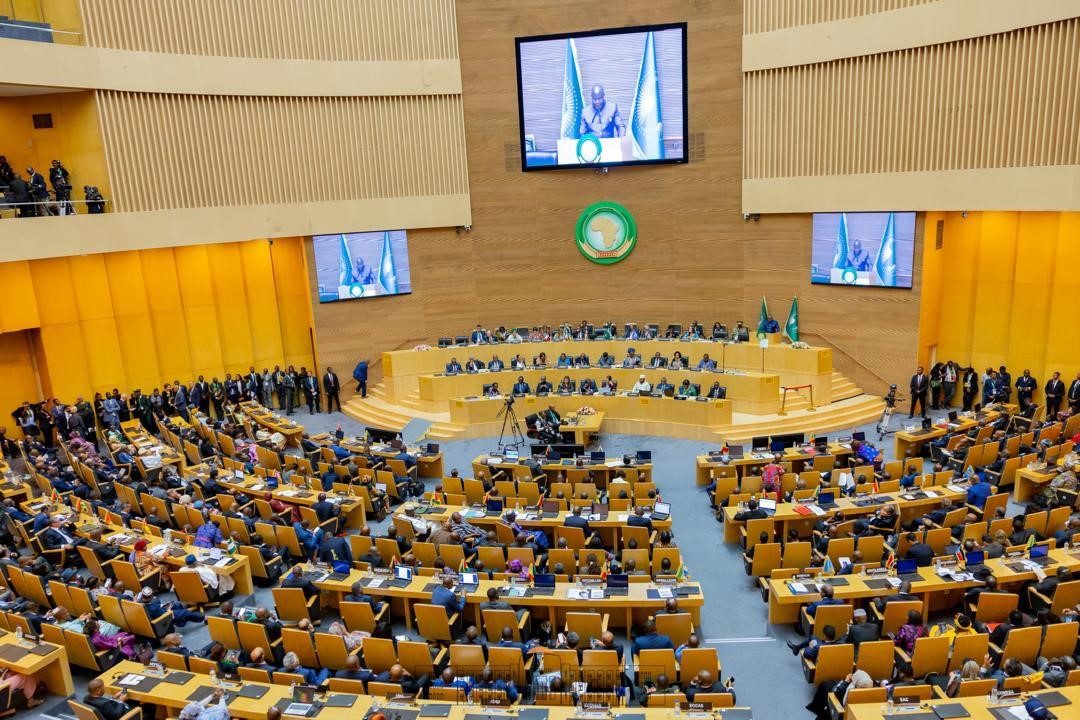
The 39th Ordinary Session of the Assembly of Heads of State and Government of the African Union has elevated water and sanitation as a strategic continental priority for 2026.

During the Opening Plenary Session, the African Union formally launched the 2026 Theme of the Year: “Assuring Sustainable Water Availability and Safe Sanitation Systems to Achieve the Goals of Agenda 2063.”By designating water and sanitation as the Theme of the Year, the African Union has placed water security at the highest political level – recognising it as a foundation for economic transformation, climate resilience, regional integration and sustainable development.

The Chairperson of the African Union Commission, H. E. Mahmoud Ali Youssouf, made a call to action to strengthen political leadership, mobilize sustainable investments, and implement integrated, climate-resilient solutions towards elevating water and sanitation as Africa’s continental priority for 2026: “Together, we will advance the Africa Water Vision 2063 and Policy, which is central to our commitment to Agenda 2063, and acceleration of industrialization and sustainable development across our beautiful continent, Africa.”

The European Union is proud to support this ambition through the Blue Africa Action, co-founded by the EU and the Government of Germany. Implemented in partnership with the African Union Commission (AUC), Blue Africa serves as a key pillar of the Team Europe Initiative on Transboundary Water Management in Africa and has supported the development of the Africa Water Vision 2063 & Policy.

Water at the Core of Africa’s Development Agenda

Water is Africa’s most strategic resource. It sustains life, drives productivity across agriculture and industry, enables energy generation, and underpins public health and environmental sustainability.

Sustainable water availability and safely managed sanitation systems are essential to achieving Agenda 2063 – The Africa We Want. Without coordinated and sustained investment in water governance, infrastructure and resilience, Africa’s broader development ambitions cannot be fully realised.

The 2026 Theme of the Year signals renewed continental commitment to accelerate implementation, strengthen institutions and mobilise financing across Member States.


From Political Priority to Continental Action

As the continental body mandated to provide political leadership, water policy direction and advocacy, the African Ministers’ Council on Water (AMCOW) stands ready to support Member States in translating this political priority into measurable results.

The Theme of the Year sets the stage for the Africa Water Vision 2063 & Policy on 15 February. The Assembly of Heads of State and Government is expected to endorse the Vision and Policy as (i) a continental implementation framework for achieving the goals of Agenda 2063, and (ii) Africa’s Common Position and input to the UN 2026 Water Conference to accelerate the implementation of SDG 6.

The Africa Water Vision 2063 and Policy provide a long-term strategic framework to secure sustainable water availability and safe sanitation for all Africans. It establishes a shared continental direction to guide action, investment and implementation in the years ahead.

Through this momentum, Africa moves from political elevation toward structured and coordinated delivery.

About the AU Assembly

The Assembly of Heads of State and Government is the supreme policy and decision-making organ of the African Union. The 39th Ordinary Session takes place on 14 –15 February 2026 at the AU Headquarters in Addis Ababa, Ethiopia.


About AMCOW

The African Ministers’ Council on Water (AMCOW), established in 2002, provides political leadership, policy direction and advocacy for water and sanitation across Africa. As the sectoral committee on water and sanitation to the African Union’s Specialised Technical Committee on Agriculture, Rural Development, Blue Economy, Water and Environment (STC-ARBWE), AMCOW coordinates continental water policy and supports Member States in advancing sustainable water management.

Working in partnership with the African Union Commission and development partners, including the Blue Africa Action co-funded by the European Union (EU) and the German Federal Ministry for Economic Cooperation and Development (BMZ), implemented by the Deutsche Gesellschaft für Internationale Zusammenarbeit (GIZ) GmbH; Gates Foundation (GF); the United Nations Economic Commission for Africa; the Global Environmental Facility through the FAO and International Water Management Institute (IWMI), AMCOW strengthens water governance, mobilises investment and promotes implementation of the Africa Water Vision 2063 & Policy in support of Agenda 2063. Further information: www.amcow-online.org


Media contact:
Mr Bala Taham | Director of Cooperate Services | E-mail: btuham@amcow-online.org 

Mr Emmanuel Uguru | Policy Officer, Monitoring Evaluation Reporting and Learning | E-mail: cuguru@amcow-online.org   


Le 39e sommet de l'UA fait de l'eau et de l'assainissement une priorité stratégique pour 2026

Le thème de l'UA pour l'année 2026 prépare le terrain pour la Vision africaine de l’eau 2063 et sa politique connexe

La 39e session ordinaire de la Conférence des chefs d’État et de gouvernement de l’Union africaine a désigné l’eau et l’assainissement comme priorité stratégique continentale pour 2026.

Lors de la séance plénière d’ouverture, l’Union africaine a officiellement lancé le thème de l’année 2026 : « Assurer la disponibilité durable de l’eau et des systèmes d’assainissement sûrs pour atteindre les objectifs de l’Agenda 2063 ». En consacrant l’année à l’eau et à l’assainissement, l’Union africaine a élevé la sécurité de l’approvisionnement en eau au plus haut niveau politique, la reconnaissant comme fondement de la transformation économique, de la résilience climatique, de l’intégration régionale et du développement durable.

Le président de la Commission de l’Union africaine, S.E. Mahmoud Ali Youssouf, a appelé à une mobilisation en faveur d’un leadership politique renforcé, d’investissements durables et de solutions intégrées et résilientes face au changement climatique, afin de placer l’eau et l’assainissement au rang des priorités continentales de l’Afrique pour 2026. Il a souligné : « Ensemble, nous ferons avancer la Vision africaine de l’eau à l’horizon 2063 et sa politique, piliers de notre engagement envers l’Agenda 2063, tout en accélérant l’industrialisation et le développement durable à travers notre continent. »

L’Union européenne est fière de soutenir cette ambition par l’initiative Blue Africa Action, cofondée par l’UE et le gouvernement allemand. Mise en œuvre en partenariat avec la Commission de l’Union africaine (CUA), Blue Africa constitue un pilier essentiel de l’initiative Team Europe sur la gestion transfrontalière de l’eau en Afrique et a accompagné l’élaboration de la Vision africaine de l’eau 2063 et de sa politique connexe.

L’eau au cœur du programme de développement de l’Afrique

L’eau est la ressource la plus stratégique de l’Afrique. Elle soutient la vie, stimule la productivité dans l’agriculture et l’industrie, permet la production d’énergie et sous-tend la santé publique et la durabilité environnementale.

La disponibilité durable de l’eau et des systèmes d’assainissement gérés de manière sûre sont essentiels à la réalisation de l’Agenda 2063 – L’Afrique que nous voulons. Sans investissements coordonnés et soutenus dans la gouvernance de l’eau, les infrastructures et la résilience, les ambitions de développement plus larges de l’Afrique ne peuvent être pleinement réalisées.

Le thème de l’année 2026 témoigne d’un engagement renouvelé du continent à accélérer la mise en œuvre, à renforcer les institutions et à mobiliser des financements dans tous les États membres.


De la priorité politique à l’action continentale

En tant qu’organisme continental chargé d’assurer le leadership politique, l’orientation des politiques et la promotion de l’eau, le Conseil des ministres africains chargés de l’eau (AMCOW) est prêt à aider les États membres à traduire cette priorité politique en résultats mesurables.

Le thème de l’année prépare le terrain pour la Vision africaine de l’eau 2063 et sa politique connexe, qui seront présentées le 15 février. L’Assemblée des chefs d’État et de gouvernement devrait approuver la Vision et la politique en tant que (i) cadre continental de mise en œuvre pour atteindre les objectifs de l’Agenda 2063, et (ii) position commune et contribution de l’Afrique à la Conférence des Nations unies sur l’eau 2026 afin d’accélérer la mise en œuvre de l’ODD 6.

La Vision africaine de l’eau 2063 et sa politique connexe fournissent un cadre stratégique à long terme visant à garantir l’accès durable à l’eau et à un assainissement sûr pour tous les Africains. Elles établissent une orientation continentale commune pour guider l’action, les investissements et la mise en œuvre dans les années à venir.

Grâce à cette dynamique, l’Afrique passe d’une élévation politique à une mise en œuvre structurée et coordonnée.

À propos de l’Assemblée de l’UA

L’Assemblée des chefs d’État et de gouvernement est l’organe suprême de politique et de décision de l’Union africaine. La 39e session ordinaire se tiendra les 14 et 15 février 2026 au siège de l’UA à Addis-Abeba, en Éthiopie.

À propos de l’AMCOW

Le Conseil des ministres africains chargés de l’eau (AMCOW), créé en 2002, assure le leadership politique, l’orientation stratégique et la promotion de l’eau et de l’assainissement à travers l’Afrique. En tant que comité sectoriel sur l’eau et l’assainissement du Comité technique spécialisé de l’Union africaine sur l’agriculture, le développement rural, l’économie bleue, l’eau et l’environnement CTS-ARBWE), l’AMCOW coordonne la politique continentale en matière d’eau et aide les États membres à promouvoir une gestion durable de l’eau.

En partenariat avec la Commission de l’Union africaine et des partenaires de développement, notamment l’initiative Blue Africa Action cofinancée par l’Union européenne (UE) et le ministère fédéral allemand de la Coopération économique et du Développement (BMZ), mise en œuvre par la Deutsche Gesellschaft für Internationale Zusammenarbeit (GIZ) GmbH, la Fondation Gates (GF), la Commission économique des Nations unies pour l’Afrique, le Fonds pour l’environnement mondial par l’intermédiaire de la FAO et l’Institut international de gestion de l’eau (IWMI), l’AMCOW renforce la gouvernance de l’eau, mobilise les investissements et promeut la mise en œuvre de la Vision africaine de l’eau 2063 et sa politique connexe à l’appui de l’Agenda 2063. Pour plus d’informations : www.amcow-online.org


Contact médias :
M. Bala Taham
| Directeur des Services généraux | E-mail : btuham@amcow-online.org

Emmanuel Uguru | Chargé de mission, Suivi, évaluation, rapports et apprentissage | E-mail : cuguru@amcow-online.org


2024 wassmo report banner
FeaturedNews

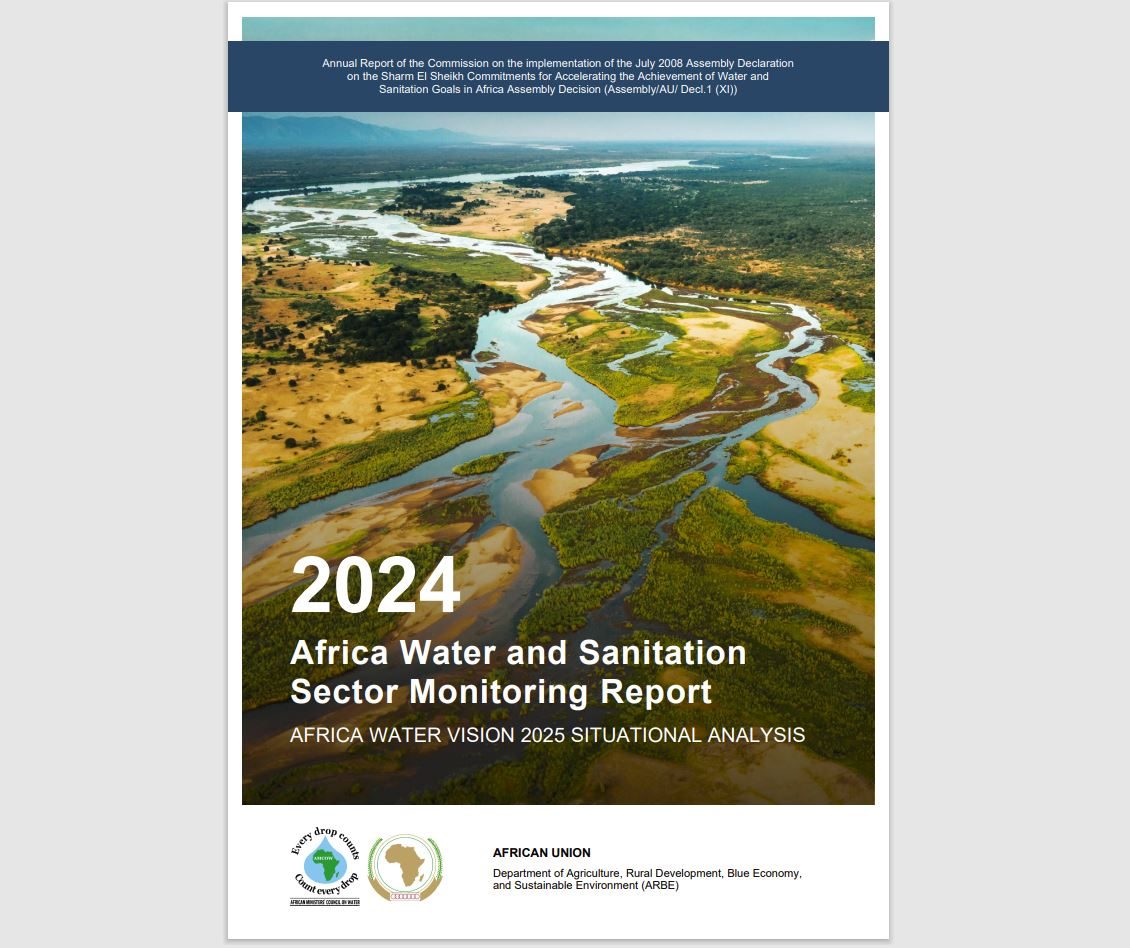
2024 AFRICA WATER AND SANITATION SECTOR MONITORING (WASSMO) REPORT

2024 AFRICA WATER AND SANITATION SECTOR MONITORING (WASSMO) REPORT

“Africa Water Vision 2025 Situational Analysis”

Water is the lifeblood of Africa’s development. It underpins our health, food security, energy access, and resilience in the face of climate change.

Please download 2024 African Water and Sanitation Sector Monitoring Report from the link below.

In July 2008, the Heads of State and Government of the African Union, meeting at the 11th Ordinary Session ofthe Assembly in Sharm El-Sheikh, reaffirmed Africa’s commitment for Accelerating the Achievement of Water and Sanitation Goals in Africa. To fulfill this commitment, the Assembly mandated the African Ministers’ Council on Water (AMCOW) to annually report to the AU Assembly on the progress made in implementing water and sanitation-related targets. Subsequently, in 2013, the African Union Commission (AUC) and AMCOW joined forces to operationalise the African Water and Sanitation Sector Monitoring and Evaluation (WASSMO) System  to facilitate the formulation of sector reports.

The report of the Commission on implementing the July 2008 Sharm El Sheikh Declaration (Assembly/AU/ Decl.1 (XI)) has been used to capture Africa’s progress towards water and sanitation goals under the Sharm El Sheikh Commitments (2008), Africa Water Vision 2025 (AWV2025), and Sustainable Development Goal 6 (SDG-6).

AMCOW has development a 2024 African Water and Sanitation Sector Monitoring which provides an assessment of Africa’s progress towards  goals envisioned at the beginning of the new millennium.

We express our gratitude to Member States that contributed to this assessment.  The 2024 African Water and Sanitation Sector Monitoring Report provided a situation analysis and informed the formulation of the Africa Water Vision 2063 and Policy.

Download 2024 African Water and Sanitation Sector Monitoring Report


RAPPORT 2024 SUR LE SUIVI DU SECTEUR DE L'EAU ET DE L'ASSAINISSEMENT EN AFRIQUE (WASSMO)

« Analyse situationnelle de la Vision africaine de l’eau 2025 »

L’eau est le moteur du développement de l’Afrique. Elle est essentielle à notre santé, à la sécurité alimentaire, à l’accès à l’énergie et à la résilience face au changement climatique.

Veuillez télécharger le rapport 2024 sur le suivi du secteur de l’eau et de l’assainissement en Afrique via le lien ci-dessous.

En juillet 2008, les chefs d’État et de gouvernement de l’Union africaine, réunis lors de la 11e session ordinaire de l’Assemblée à Charm el-Cheikh, ont réaffirmé l’engagement de l’Afrique à accélérer la réalisation des objectifs en matière d’eau et d’assainissement. À cet effet, l’Assemblée a mandaté le Conseil des ministres africains chargés de l’eau (AMCOW) pour rendre compte annuellement à l’Assemblée de l’UA des progrès accomplis dans la mise en œuvre de ces objectifs. En 2013, la Commission de l’Union africaine (CUA) et l’AMCOW ont conjointement mis en place le système africain de suivi et d’évaluation du secteur de l’eau et de l’assainissement (WASSMO) afin de faciliter l’élaboration des rapports sectoriels.

Le rapport de la Commission sur la mise en œuvre de la Déclaration de Charm el-Cheikh de juillet 2008 (Assembly/AU/Decl.1 (XI)) a servi à évaluer les progrès réalisés par l’Afrique vers les objectifs d’eau et d’assainissement, dans le cadre des engagements de Charm el-Cheikh (2008), de la Vision africaine de l’eau 2025 (VAE2025) et de l’Objectif de développement durable n°6 (ODD-6).

L’AMCOW a produit le rapport de suivi du secteur africain de l’eau et de l’assainissement pour 2024, qui évalue les avancées de l’Afrique vers les objectifs fixés au début du nouveau millénaire.

Nous remercions les États membres ayant contribué à cette évaluation. Le rapport 2024 a fourni une analyse approfondie de la situation et éclairé l’élaboration de la Vision africaine de l’eau 2063 et de sa politique connexe.

Télécharger le rapport 2024 de suivi du secteur de l’eau et de l’assainissement en Afrique


policy-banner
FeaturedSpecial Messages

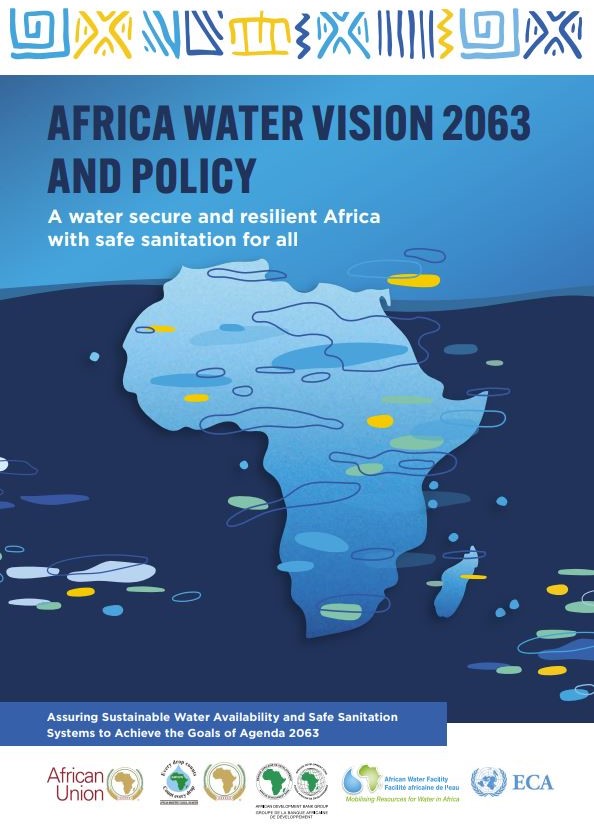
Africa Water Vision 2063 and Policy

ENGLISH
Africa Water Vision 2063 and Policy

"A Water-Secure and Resilient Africa with Safe Sanitation for All"

Water is Africa’s most vital strategic resource. It sustains lives, powers economies and underpins peace, stability and prosperity across the continent.

The Africa Water Vision 2063 & Policy sets out a bold continental blueprint to secure sustainable water availability and safe sanitation systems in pursuit of Agenda 2063 – The Africa We Want.

The Africa Water Vision 2063 & Policy stands on a clear foundation: eight Vision Statements, each with its own set of policy goals. They are the compass points of Africa’s journey – showing not just what must be achieved, but why it matters. Together, vision statement turn ambition into action – guiding Africa step by step towards a water-secure and dignified future.
  1. Universal access to safely managed water, sanitation, and hygiene services, anchored in reliable household water quality, inclusive and resilient service delivery, and the mitigation of health and environmental hazards from waste.
  2. Sustainable water availability for transformed economies and growing populations , secured through managing demand, enhancing efficiency and productivity across all sectors, and building resilience to climate variability and water-related disasters.
  3. A thriving blue economy that leverages aquatic resources for prosperity, balancing sustainable development with ecosystem preservation through targeted investment in innovation, infrastructure, and governance to build climate resilience and combat illegal fishing and marine pollution.
  4. Good water governance, accountable institutions, and transformative leadership, built on trust through accountability and data sharing, inclusive multi-stakeholder engagement, mobilised political commitment, and strengthened knowledge systems.
  5. Water basins as shared natural assets driving peace, trade, and integration, advanced by investment-led transboundary cooperation for equitable benefits, integrated source protection, pollution control, risk management, and holistic nexus approaches.
  6. Resilient people, economies, and ecosystems protected from water-related disasters, achieved by safeguarding aquatic ecosystems, establishing sustainability-focused regulatory frameworks, improving sectoral practices to reduce pollution, and directing investment towards climate-resilient infrastructure.
  7. Human capital, technology, and adaptive learning enabling effective resource stewardship, achieved by safeguarding aquatic ecosystems, establishing sustainability-focused regulatory frameworks, improving sectoral practices to reduce pollution, and directing investment towards climate-resilient infrastructure.
  8. Legitimised water information systems that guide economic planning and investment, supported by institutionalising water valuation, strengthening systems to articulate its diverse values and the circular sanitation economy, and enhancing the environment for strategic investment.
This is more than a policy document. It is a call to leadership, partnership and coordinated action across the continent.
Access the full publication to explore the eight Vision Statements, the Action Framework and the implementation pathway towards a water-secure Africa.
FRENCH
Vision africaine de l’eau à l'horizon 2063 et sa politique connexe

« Une Afrique résiliente, dotée d’un accès sécurisé à l’eau et d’un assainissement sûr pour tous »

L’eau est la ressource stratégique la plus vitale de l’Afrique. Elle soutient la vie, alimente les économies et sous-tend la paix, la stabilité et la prospérité à travers le continent.

La Vision africaine de l’eau à l’horizon 2063 et sa politique connexe définissent un plan d’action continental ambitieux visant à garantir un approvisionnement durable en eau et des systèmes d’assainissement sûrs dans le cadre de la mise en œuvre de l’Agenda 2063 – L’Afrique que nous voulons.

La Vision africaine de l’eau à l’horizon 2063 et sa politique connexe reposent sur des bases claires : huit énoncés de vision, chacune assortie d’un ensemble d’objectifs politiques. Elles constituent les points cardinaux du parcours de l’Afrique, indiquant non seulement ce qui doit être réalisé, mais aussi pourquoi cela est important. Ensemble, ces énoncés de vision transforment l’ambition en action, guidant l’Afrique pas à pas vers un avenir sûr et digne en matière d’eau.

  1. Accès universel à des services d’eau, d’assainissement et d’hygiène gérés de manière sûre, fondés sur une qualité fiable de l’eau domestique, une prestation de services inclusive et résiliente, ainsi que l’atténuation des risques sanitaires et environnementaux liés aux déchets.
  2. Disponibilité durable de l’eau pour des économies transformées et des populations croissantes, garantie par la gestion de la demande, l’amélioration de l’efficacité et de la productivité dans tous les secteurs, et le renforcement de la résilience face à la variabilité climatique et aux catastrophes liées à l’eau.
  3. Une économie bleue florissante qui exploite les ressources aquatiques pour la prospérité, en équilibrant développement durable et préservation des écosystèmes grâce à des investissements ciblés dans l’innovation, les infrastructures et la gouvernance, afin de renforcer la résilience climatique et de lutter contre la pêche illégale et la pollution marine.
  4. Bonne gouvernance de l’eau, institutions responsables et leadership transformateur, fondés sur la confiance par la responsabilité et le partage des données, l’engagement inclusif des multiples parties prenantes, la mobilisation de l’engagement politique et le renforcement des systèmes de connaissances.
  5. Bassins hydrographiques considérés comme des biens naturels communs favorisant la paix, le commerce et l’intégration, grâce à une coopération transfrontalière axée sur l’investissement pour des avantages équitables, une protection intégrée des sources, le contrôle de la pollution, la gestion des risques et des approches holistiques.
  6. Populations, économies et écosystèmes résilients, protégés contre les catastrophes liées à l’eau, grâce à la sauvegarde des écosystèmes aquatiques, à l’établissement de cadres réglementaires axés sur la durabilité, à l’amélioration des pratiques sectorielles visant à réduire la pollution et à l’orientation des investissements vers des infrastructures résilientes au changement climatique.
  7. Capital humain, technologie et apprentissage adaptatif permettant une gestion efficace des ressources, grâce à la protection des écosystèmes aquatiques, à la mise en place de cadres réglementaires axés sur la durabilité, à l’amélioration des pratiques sectorielles visant à réduire la pollution et à l’orientation des investissements vers des infrastructures résilientes au changement climatique.
  8. Systèmes d’information sur l’eau légitimés qui guident la planification économique et les investissements, soutenus par l’institutionnalisation de l’évaluation de l’eau, le renforcement des systèmes permettant d’articuler ses diverses valeurs et l’économie circulaire de l’assainissement, ainsi que l’amélioration de l’environnement pour les investissements stratégiques.

Il s’agit de bien plus qu’un simple document politique.

C’est un appel au leadership, au partenariat et à une action coordonnée à travers le continent.

Accédez à la publication complète pour découvrir les huit énoncés de vision, le cadre d’action et la voie à suivre pour parvenir à une Afrique où l’eau est sécurisée